 DSTechnoverse company

Carbon Credit Near Me: How to Find and Evaluate Providers
If you are searching for a carbon credit near me, the short answer is this: look for a provider that can serve your location, supports the type of credit you need, and can show the documentation behind every unit. “Near” matters less in carbon markets than most buyers expect. Credits are recorded in registries, not stored in a warehouse, so a provider in another city or country can often complete a transaction as smoothly as one down the road. What matters is service area, product availability, and whether the credits suit your intended use.
This guide explains what carbon credits are, how buying works, how to judge quality, and where CORSIA fits for aviation.
Carbon Credit Near Me: What Buyers Are Really Looking For
What is a carbon credit?
A carbon credit generally represents one metric tonne of carbon dioxide equivalent (CO₂e) that has been reduced, avoided, or removed from the atmosphere. The exact meaning depends on the crediting program and methodology under which it was issued. Credits are issued by a registry, tracked by serial number, and eventually retired, meaning permanently taken out of circulation so they cannot be sold or claimed twice.
What does “near me” mean for carbon credits?
The phrase can mean three different things. Some buyers want carbon credit providers in their area for easier communication and local market knowledge. Others want regional suppliers familiar with domestic projects. Many are simply looking for carbon credit companies near them that can handle remote or international transactions.
Provider availability depends on the actual service area, the markets supported, and the documentation each transaction needs. A website ranking in a local search does not mean the company is physically nearby, so confirm directly whether a provider serves your location and can support your requirements.
Types of Carbon Credits and Carbon Offset Solutions
Avoidance, reduction and removal credits
Avoidance credits come from projects that prevent emissions that would otherwise have occurred, such as protecting a forest from clearing. Reduction credits come from projects that cut emissions compared with a baseline, such as renewable energy, methane capture from landfills or farms, and improved waste management. Removal credits come from projects that pull carbon out of the atmosphere, such as reforestation, mangrove restoration, or engineered removal technologies.
These categories behave differently. Removals are often priced higher than renewable energy credits, for example, and each carries its own risks around durability and measurement.
Voluntary and compliance markets
Voluntary carbon markets serve organizations that choose to offset emissions for their own climate goals. Compliance markets are created by regulation, and only units that meet the scheme’s rules can be used. Credits are not interchangeable between the two: a unit that is perfectly valid in one setting may be unusable in another.
Carbon credits versus carbon offsets
In everyday use, the two terms are often treated as the same thing. Strictly, a credit is the issued unit, while an offset describes the act of using it to balance emissions. Because labels vary, assess the specific product, the accounting framework you report under, and the claim you intend to make, rather than relying on the name.
How to Buy Carbon Credits and Evaluate Carbon Credit Providers
How carbon credit purchasing works
A typical purchase follows a clear sequence. You define your requirement first: volume, purpose, and any programs or project types you can accept. Next you compare credit types and review project documentation, including the project design document and verification reports. Then you compare price and quality across options, complete the transaction, and confirm that the units have been transferred to your registry account or retired in your name. Timelines vary with the project, the registry, and the transaction structure, so treat any fixed delivery promise with caution.
How to evaluate a carbon credit provider
Strong providers can explain a credit’s origin without hesitation. Check these elements:
- Registry and methodology: the credit should sit in a recognized registry under a named methodology.
- Additionality: would the reduction have happened without carbon finance?
- Permanence and leakage: will stored carbon stay stored, and has emission activity simply moved elsewhere?
- Monitoring and verification: is there independent third-party verification on record?
- Vintage, ownership and double counting: which year did the reduction occur, who holds title, and can the same tonne be claimed by someone else?
A registry listing or a verification label does not remove every quality risk. Ask for documents and read them.
What influences carbon credit costs
There is no single price for a carbon credit. Cost is shaped by project type, methodology, vintage, verification standard, market demand, delivery terms, order volume, and the structure of the transaction. Be wary of anyone quoting a universal “market average” without context, and always compare quotes for like-for-like units.
Corporate Carbon Offsetting, International Markets and CORSIA Carbon Credits
Business applications
Carbon credits work best as one part of a broader climate strategy, not a substitute for it. Organizations should measure their emissions and reduce them first, then consider credits for residual emissions or other uses permitted under the relevant standard. Purchasing credits does not automatically make a company carbon neutral, and it does not guarantee a specific environmental outcome. Claims should follow the applicable claims guidance.
Sourcing across borders
Credits can be sourced internationally, but eligibility, documentation, and buyer requirements vary by market and by intended use. Importers, exporters, and multinational buyers should confirm early that a credit’s registry, vintage, and authorization status match their reporting needs.
CORSIA and aviation
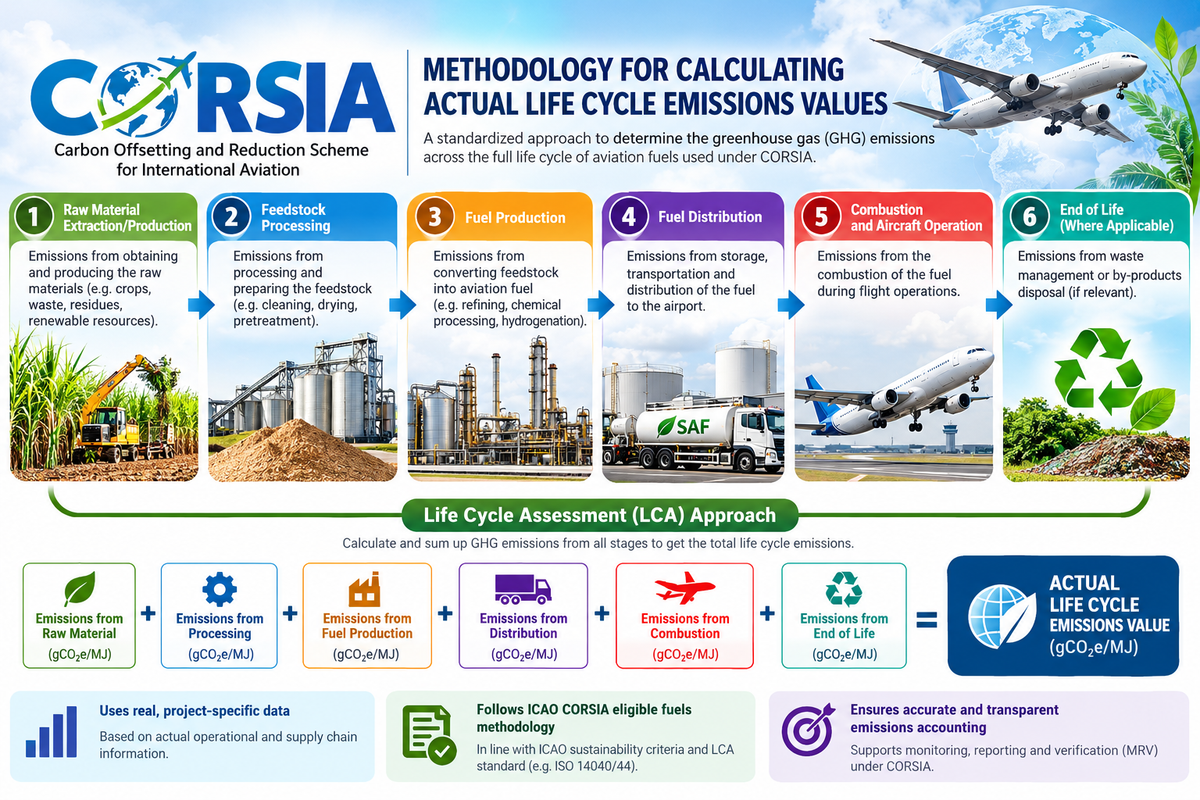
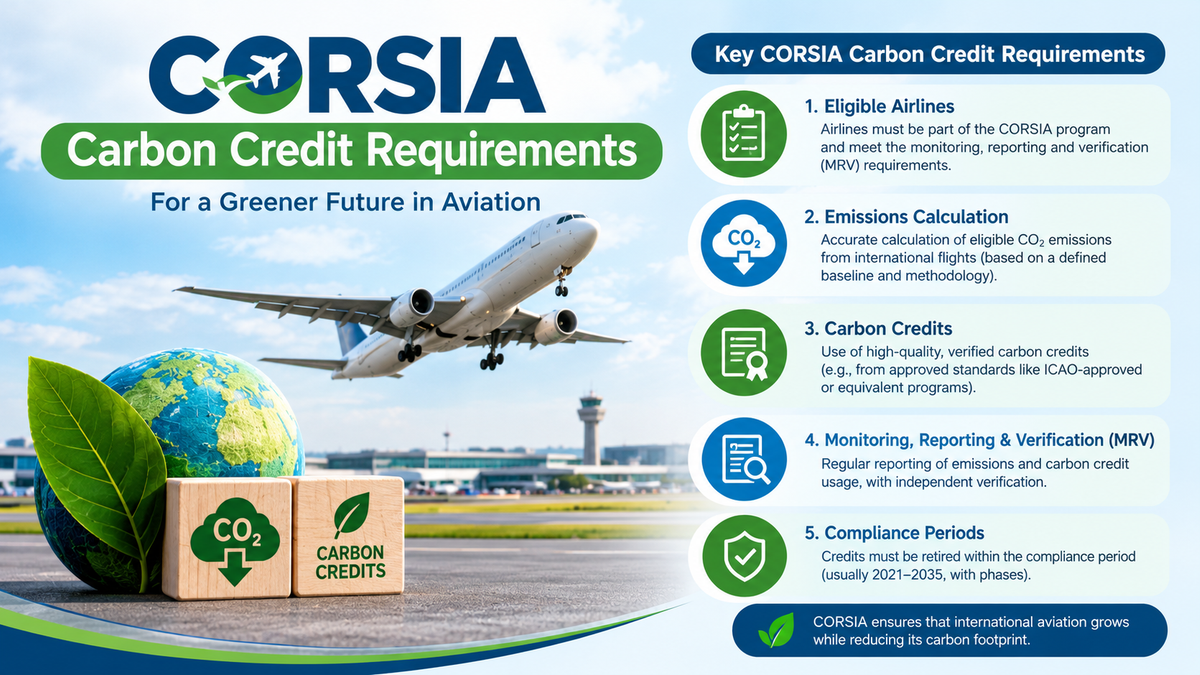
The Carbon Offsetting and Reduction Scheme for International Aviation (CORSIA) is a global scheme developed by ICAO to address growth in international aviation emissions. Aircraft operators covered by it may need to cancel eligible emissions units to meet their offsetting requirements. Only units that meet applicable ICAO requirements, including approved programs and eligibility criteria for the relevant compliance period, can be used for CORSIA compliance. Buying a voluntary credit does not, by itself, satisfy any CORSIA obligation.
Questions to ask before purchasing
Before you commit, put these questions to any provider:
- Which registry and program issued these credits, and can I see the serial numbers?
- What is the vintage, and does it fit my intended use?
- Can you share the project design document and verification reports?
- What are the delivery, transfer, and retirement terms?
- Does the credit meet the requirements of my specific purpose, whether voluntary or compliance?
When you first contact a provider, share your intended use, required volume, preferred project types, vintage window, and the programs or standards you can accept. That lets them tell you quickly what is realistic.
Why Choose CORSIA Carbon Credit
CORSIA Carbon Credit is a carbon credit marketplace and advisory desk based in Indore, India, operated by DSTechnoverse. Its website describes support for aircraft operators, companies, and project developers, with listings that name the registry, methodology, and vintage, and a retirement certificate issued with purchases. The team also describes pre-purchase due diligence, registry transfer or cancellation, and CORSIA compliance support for airlines.
Its approach separates general carbon credit sourcing from CORSIA-eligible units. Not every credit discussed or listed is suitable for CORSIA, and the site itself points to the checks that decide eligibility: an ICAO-approved program, an eligible vintage, and host-country authorization with a corresponding adjustment. Availability and eligibility are confirmed before any contract.
If you want help turning a requirement into a shortlist, these carbon credit solutions are a practical starting point. Visit the website to discuss your volume, intended use, and documentation needs, and confirm which options are available and suitable for you.
Frequently Asked Questions
1. What should I look for when searching for carbon credit providers near me? Confirm that the provider serves your location and supports your transaction. Look for named registries, project documentation, clear retirement or transfer procedures, and transparent terms. Proximity helps with communication, but documentation quality matters more.
2. How much does it cost to buy carbon credits? Prices vary by project type, methodology, vintage, verification standard, market demand, volume, delivery terms, and transaction structure. Ask for quotes on specific units and compare them like for like.
3. How can I verify the quality of a carbon credit? Check the registry record and serial numbers, then review the project documents and verification reports. Assess additionality, permanence, leakage, vintage, ownership, and double-counting risk. A registry listing alone does not remove every quality risk.
4. Can I buy carbon credits from an international provider? Yes, in many cases. Registries make cross-border transactions possible, but eligibility, documentation, and buyer requirements vary by market and intended use, so confirm these before purchasing.
5. Are all carbon credits eligible for CORSIA compliance? No. CORSIA eligibility depends on applicable ICAO requirements, including approved programs, eligibility criteria, and the relevant compliance period. Many credits are valid for voluntary use but do not qualify for CORSIA.