 DSTechnoverse company
CORSIA Carbon Credits Price: Market Rates, Pricing Factors and Buying Considerations
CORSIA carbon credit prices are not fixed and there is no single universal rate. In 2026, publicly reported benchmarks for first-phase eligible units have moved between roughly USD 9.50 and USD 23 per tonne of CO2 equivalent, depending on the date and the source. Fastmarkets, for example, assessed Phase 1 spot units at USD 11.60 per tCO2e on 15 July 2026. This article explains why prices differ, what influences them, and how buyers can estimate costs.
What Is the Price of CORSIA Carbon Credits?
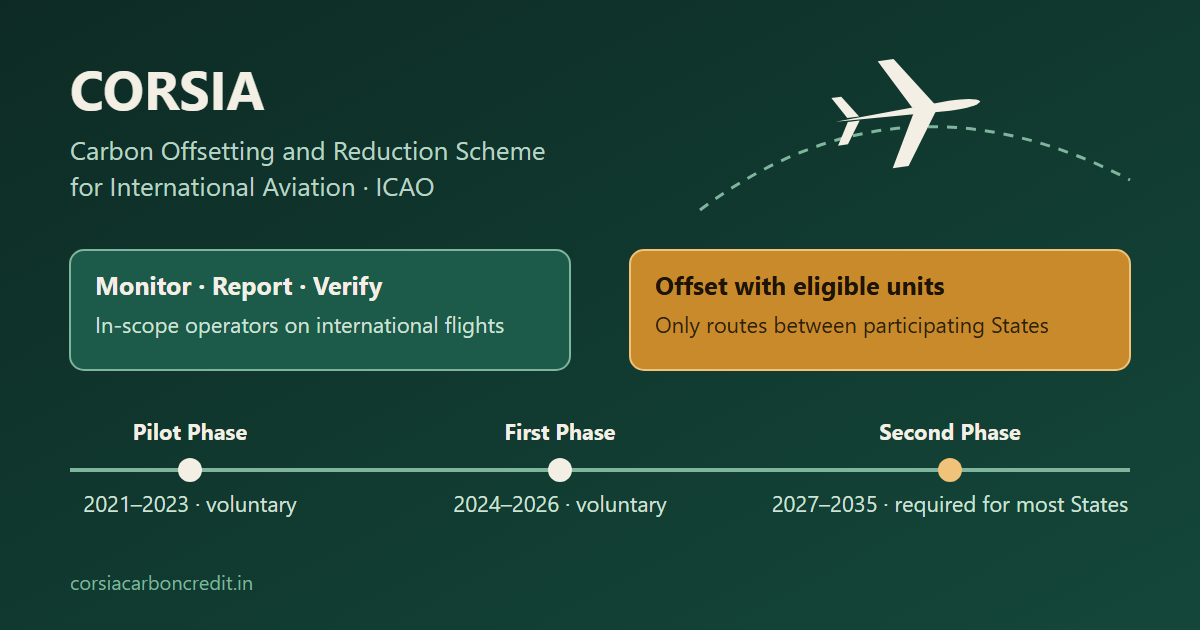
CORSIA, the Carbon Offsetting and Reduction Scheme for International Aviation, was developed by the International Civil Aviation Organization (ICAO). Airlines use it to offset emissions above an agreed baseline by cancelling “CORSIA Eligible Emissions Units” (EEUs). The first compliance phase covers 2024–2026, and ICAO’s programme documentation defines which units qualify.
There is no single standard price, because “CORSIA-eligible” describes a compliance status, not one uniform product. Units differ by programme, project type, vintage, and the supply available at a given time. Price sources also differ in nature:
- Indicative market assessments: Fastmarkets assessed Phase 1 spot units at USD 12.45 per tCO2e on 13 May 2026, USD 9.50 (a reported record low) on 24 June 2026, and USD 11.60 on 15 July 2026. Its assessments are published in USD per tCO2e.
- Exchange futures: ICE Futures Europe lists CORSIA Phase 1 futures. One lot equals 1,000 units, quoted in USD per tonne.
- Reported transactions: Carbon Pulse reported on 29 July 2026 that eligible units from a Cambodian cookstove project cleared above USD 12 per tonne at auction.
Earlier in the cycle, Fastmarkets reported a peak of USD 23.20 per tCO2e in October 2025, when very few projects were eligible. These figures are snapshots and should not be read as a universal market rate.
What Factors Affect CORSIA Carbon Credits Prices?
Eligibility under CORSIA requirements. A unit must meet ICAO’s criteria for the relevant compliance period. During 2025, supply was tight because only one project was tagged as eligible for Phase 1, according to Fastmarkets. As more projects gained eligibility, prices fell.
Programme and methodology. Units come from different programmes and project methodologies. Fastmarkets has noted that newly eligible cookstove methodologies introduced cheaper supply, which pushed benchmark prices down.
Vintage and issuance period. Eligibility rules can limit which vintages count for a given phase. Fastmarkets’ Phase 1 assessment, for instance, covers vintages 2021 to 2026.
Project quality and environmental integrity. Buyers increasingly look at the specific credit type, not just the CORSIA label. Policy discussions, such as the European Commission’s proposal on additional quality criteria for EEA operators, can also move sentiment and prices.
Market demand and available supply. Prices respond to the gap between airline demand and eligible supply. Procurement timing matters too: market participants have reported that many airlines were holding back purchases, which weighed on prices.
Delivery terms, transaction size, and procurement arrangements. Spot versus forward delivery, volume, payment terms, and counterparty structure all affect the final price. Fastmarkets’ benchmark, for example, assumes prompt delivery in lots of 10,000 to 100,000 tCO2e.
How Can Airlines and Businesses Estimate CORSIA Carbon Credit Costs?
The basic formula is:
Estimated procurement cost = Number of eligible units required × Price per unit
Hypothetical example (not a market quotation): Suppose an operator needs 100,000 eligible units and assumes a price of USD 12.00 per unit. The base cost is 100,000 × USD 12.00 = USD 1,200,000. If the operator also assumes 3% for additional costs, that adds USD 36,000, for a total of USD 1,236,000. Both the price and the 3% are illustrative assumptions only.
Additional costs may include:
- Brokerage or platform fees
- Due diligence and legal review
- Registry transaction fees
- Delivery arrangements
- Retirement or cancellation arrangements, where applicable
A headline price rarely equals the all-in cost, so buyers should request itemised quotations.
Where Can Buyers Check CORSIA Carbon Credit Prices?
No single public source shows every completed trade. Buyers can combine several:
- Carbon market research reports and price assessments, such as Fastmarkets, which publishes weekly Phase 1 assessments.
- Exchange data, such as ICE Futures Europe CORSIA contracts.
- Reputable brokers and suppliers, who can provide indicative or firm quotes.
- Programme and registry documentation, to confirm unit status and issuance.
- Direct supplier quotations and independent due diligence.
Buyers should verify eligibility unit by unit. A programme name or a supplier’s marketing claim does not confirm that a specific unit qualifies for a given compliance period. Checking ICAO’s published eligibility documentation and the registry record is the safer approach. For readers who want background on how CORSIA Carbon Credits are sourced and procured for aviation compliance, comparing several independent sources is good practice.
What Should Buyers Consider Before Purchasing CORSIA Carbon Credits?
- Current ICAO eligibility requirements: Rules and approved programmes can change, so check the latest ICAO documents.
- Applicable compliance period: Phase 1 covers 2024–2026, with a later phase for 2027–2029. Units must match the period.
- Eligible programme and unit type: Confirm the programme approval and any conditions attached to the unit.
- Vintage restrictions and other conditions: Check vintage limits and any host-country authorisation or adjustment requirements.
- Registry records and ownership: Confirm serial numbers, status, and clear ownership.
- Verification and documentation: Keep documentation for audit and reporting.
- Delivery, cancellation, and retirement arrangements: Agree who handles registry transfers and cancellation, and when.
A low price alone does not show that a credit is suitable for CORSIA compliance. A cheap unit that is later found ineligible can cost more than a higher-priced eligible one.
Frequently Asked Questions
1. What is the current price of CORSIA carbon credits? There is no single current price. Fastmarkets assessed Phase 1 spot units at USD 11.60 per tCO2e on 15 July 2026, after a reported low of USD 9.50 on 24 June 2026. Carbon Pulse reported an auction clearing above USD 12 per tonne on 29 July 2026. These are indicative assessments and one reported auction, not a universal rate, and prices may have moved since.
2. Why do CORSIA carbon credit prices vary? Prices vary with eligibility status, programme, project type, vintage, supply and demand, policy news, and delivery terms. Sources also differ: an assessment, a futures price, and a completed trade are not the same thing.
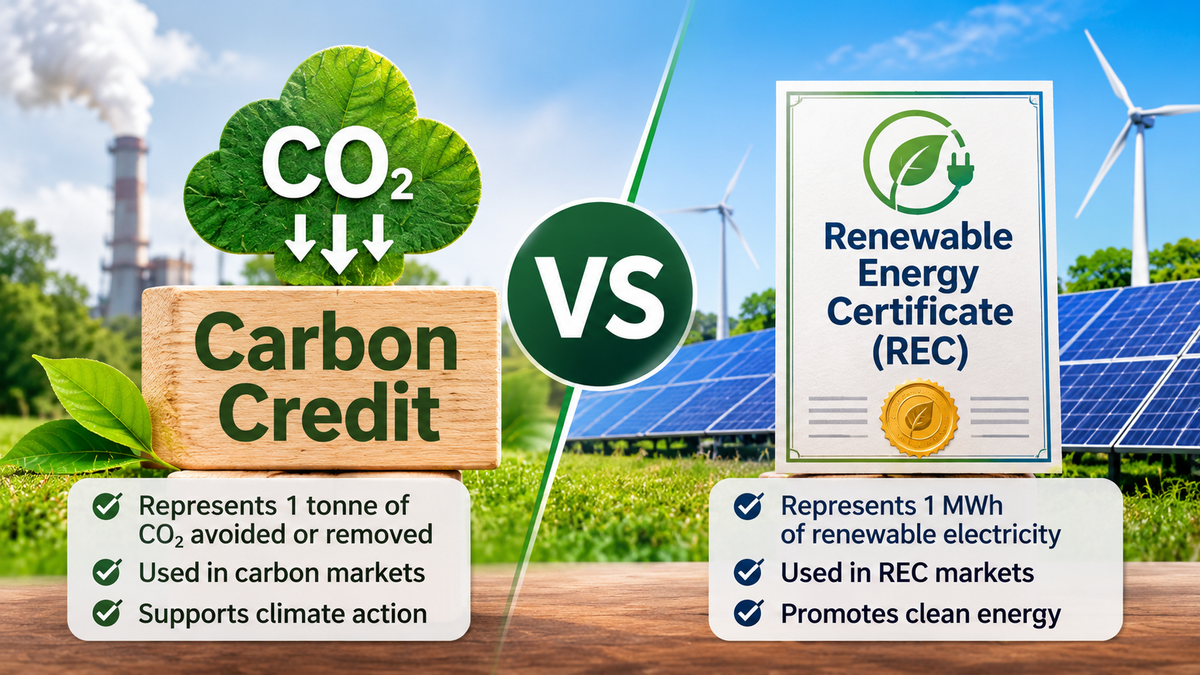
3. Are CORSIA carbon credits more expensive than voluntary carbon credits? Not necessarily. Eligible units can trade at a premium or a discount depending on the credit type and market conditions. Fastmarkets has reported cases where CCP-tagged cookstove credits traded above CORSIA Phase 1 units.
4. How do airlines calculate the cost of CORSIA carbon credits? They multiply the number of eligible units required by the price per unit, then add costs such as brokerage, due diligence, registry fees, and delivery or retirement arrangements.
5. Where can buyers check CORSIA carbon credit prices? Buyers can use carbon market research (for example, Fastmarkets assessments), exchange data such as ICE, broker and supplier quotations, and registry and ICAO documentation. Public prices may not represent completed transactions, so direct quotations and due diligence are important.