 DSTechnoverse company
How Are Carbon Credits Used? Applications, Benefits and Real-World Examples
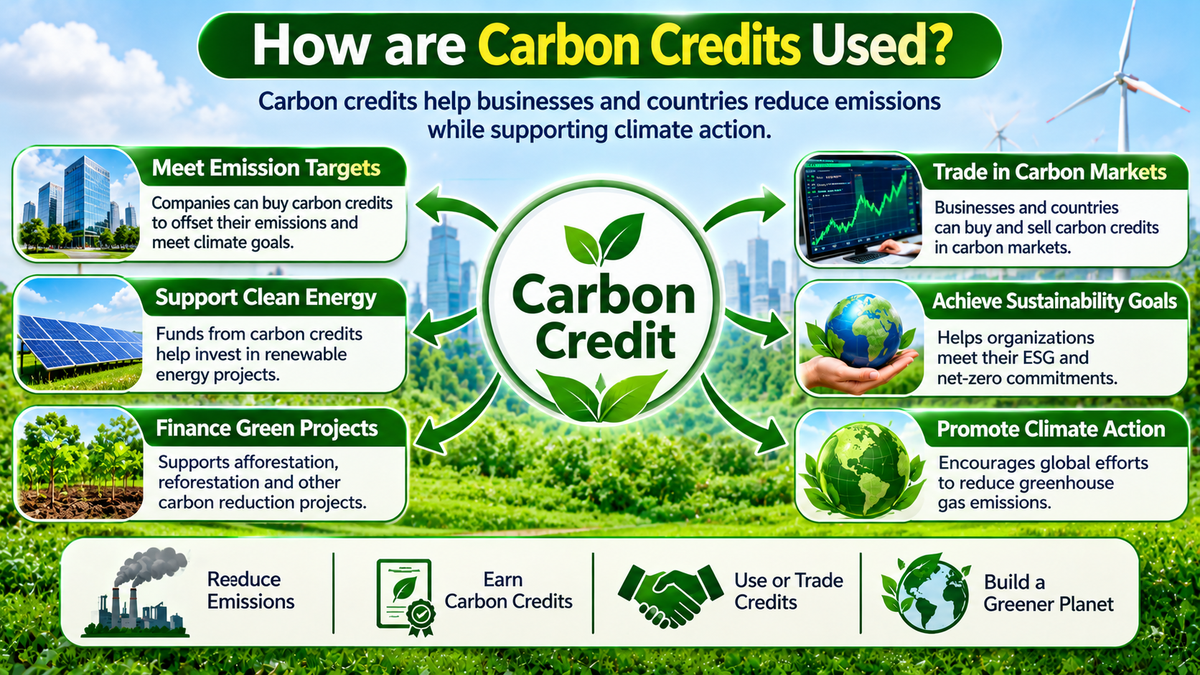
Carbon credits are used by businesses, governments, and airlines to support climate projects, address residual emissions, and, in regulated settings, meet specific legal obligations. One credit generally represents one metric tonne of CO₂ equivalent (CO₂e) reduced, avoided, or removed, subject to the programme’s rules. Once a credit is used for a claim or compliance purpose, it is retired so it cannot be used again. This guide explains how are carbon credits used in practice, across industries and market types.
What Are Carbon Credits and Why Are They Used?
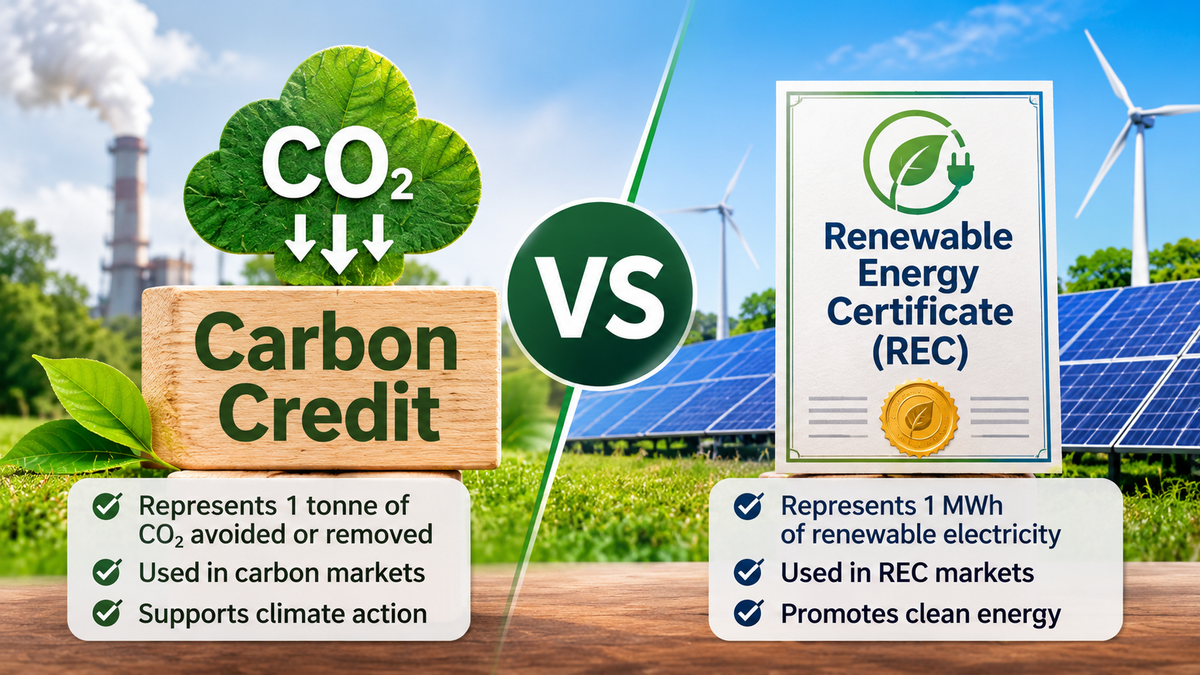
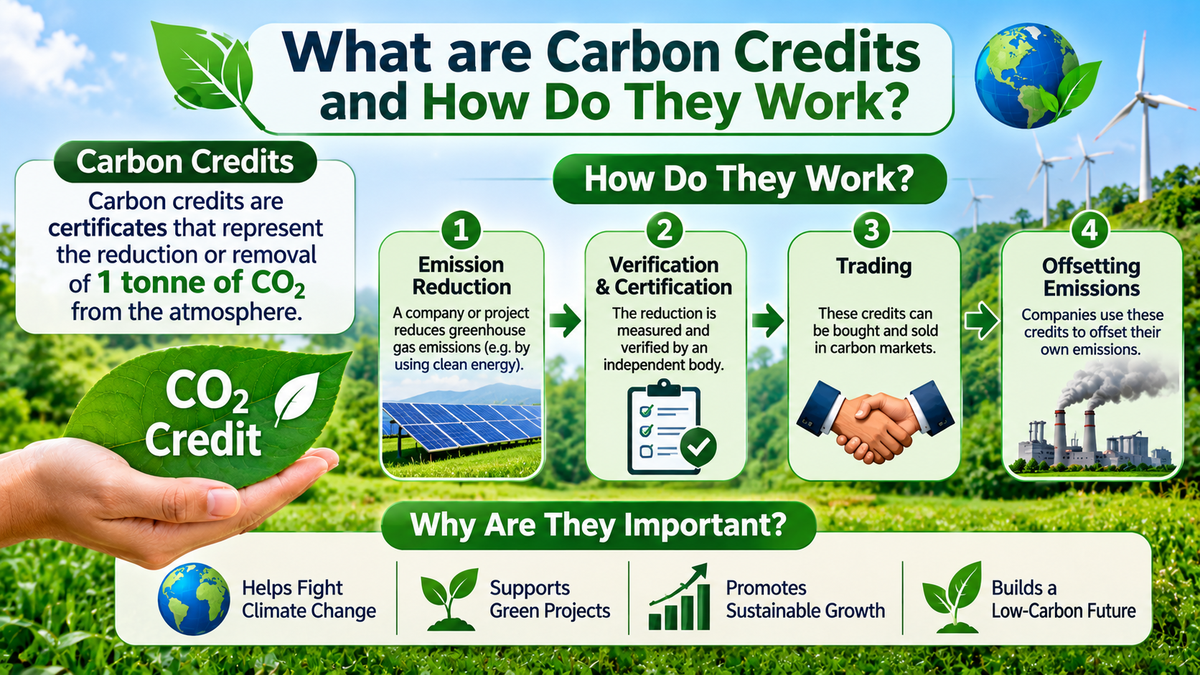
Greenhouse gases such as carbon dioxide, methane, and nitrous oxide trap heat in the atmosphere. Because each gas warms the planet differently, emissions are measured in a common unit: carbon dioxide equivalent (CO₂e). A carbon credit generally represents one tonne of CO₂e that a project has reduced, avoided, or removed, according to the applicable programme’s accounting rules.
Credits are created to direct finance towards climate-related projects. Developers earn revenue that can make projects viable, while buyers gain a way to support climate action or address emissions they cannot yet eliminate. Credits are used in both voluntary markets, where buying is a choice, and regulated markets, where eligible units help entities meet legal requirements.
A simple example: A landfill operator installs equipment to capture methane that would otherwise escape. An independent auditor verifies the reduction, and the programme issues credits. A manufacturing company buys some of those credits, and the registry retires them in the company’s name to support a climate claim.
How Do Businesses Use Carbon Credits in Their Sustainability Strategies?
Most credible corporate strategies follow a sequence in which credits come late, not first.
- Assess the carbon footprint. Companies measure emissions across their operations and value chain, often using the GHG Protocol.
- Reduce emissions directly. Energy efficiency, electrification, cleaner fuels, and process changes cut emissions at the source.
- Manage residual emissions. After feasible reductions, some emissions may remain, especially in hard-to-abate activities. Carbon credits may be considered for these.
- Purchase credits voluntarily. Companies select credits from recognised programmes and retire them against a defined claim.
- Support climate commitments. Credits may form one part of a wider net-zero or climate target, depending on the standards the company follows.
- Report accurately. Environmental reports should state what was reduced internally and what was addressed through credits, as two separate activities.
Organisations should prioritise their own reductions first because they lower emissions directly and permanently within the business. Buying credits is a different activity: it supports reductions or removals elsewhere. Credits should not replace feasible direct reductions.
How Are Carbon Credits Used Across Different Industries?
Use varies by sector, and it is important to separate voluntary use from regulatory obligations.
- Aviation and airlines: International airlines may need to cancel eligible emissions units under CORSIA, which is a regulatory framework. Airlines may also offer voluntary offsetting options to passengers.
- Manufacturing and industrial operations: Manufacturers may use credits voluntarily for residual process emissions that are hard to eliminate. Some facilities may also be covered by regulated schemes with their own rules.
- Energy and power generation: Utilities in regulated markets may face emissions limits and compliance rules. Some also buy credits voluntarily to address emissions they cannot yet cut.
- Transportation and logistics: Fleet and freight operators may use credits for emissions from long-haul or heavy transport, alongside fuel efficiency and fleet upgrades.
- Agriculture and forestry: These sectors often generate credits, for example through improved land management, soil carbon, or forest protection, as well as sometimes buying them.
- Technology and service companies: These firms commonly buy credits voluntarily to address residual emissions from offices, data centres, and business travel after efficiency and renewable electricity measures.
In every case, whether credits can be used depends on the applicable rules, not only on the buyer’s intent.
How Are Carbon Credits Used in Carbon Offsetting and Compliance Markets?
In voluntary carbon offsetting, an organisation chooses to buy credits, usually through a developer, broker, or trading platform. Ownership is transferred in a registry, and the credits are retired against a claim, such as addressing a portion of residual emissions.
In compliance markets, regulated entities have legal obligations and may use eligible instruments to meet them. Which instruments qualify is set by the relevant regulation or scheme, and eligibility rules differ between frameworks.
In both contexts, registry tracking and retirement are essential. The registry records issuance, transfers, and retirement, which helps prevent the same credit from being used twice. Documentation, such as retirement records and verification reports, supports any environmental claim.
Here is how the two compare.
Purpose
- Voluntary: To support climate goals by choice.
- Compliance: To meet a legal obligation under a mandatory scheme.
Who participates
- Voluntary: Companies, institutions, individuals, developers, brokers.
- Compliance: Regulated entities, regulators, and scheme administrators.
Governing rules
- Voluntary: Independent programmes and standards, sometimes with government oversight.
- Compliance: Law, regulation, or international agreement.
How credits are used
- Voluntary: Retired to support a stated claim.
- Compliance: Surrendered or cancelled to meet a defined requirement.
Eligibility
- Voluntary: Broad range of projects; buyers assess quality.
- Compliance: Only units that meet the scheme’s criteria are accepted.
Documentation
- Voluntary: Retirement records and project documents back the claim.
- Compliance: Formal records are submitted as the scheme requires.
Compliance instruments and eligibility rules always depend on the relevant regulatory framework, so a credit that works in one setting may not work in another.
How Are Carbon Credits Used in International Aviation Under CORSIA?
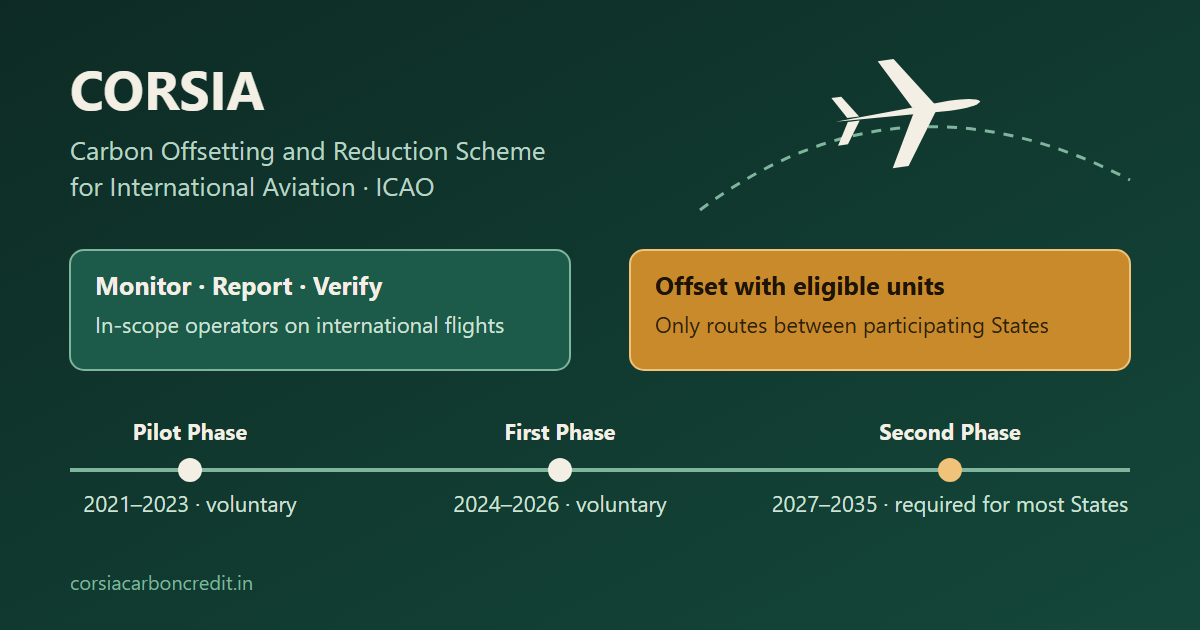
International aviation is hard to decarbonise quickly, since sustainable fuels and new aircraft technologies are still scaling up. The International Civil Aviation Organization (ICAO) created CORSIA, the Carbon Offsetting and Reduction Scheme for International Aviation, to address growth in international aviation emissions above an agreed baseline.
Under CORSIA, airlines monitor and report their international flight emissions, and these reports are verified. Offsetting requirements are then calculated under the scheme’s rules, and operators meet them by procuring and cancelling eligible emissions units. Readers who want more context on this segment can read about CORSIA Carbon Credits and how eligible units fit into aviation offsetting.
Not every airline or flight has identical obligations. Requirements depend on factors such as the routes flown, the states involved, the operator’s emissions, and the scheme’s phases and rules.
CORSIA-eligible emissions units must come from programmes approved by ICAO and meet its criteria, including conditions on vintage and on avoiding double claiming. Operators must keep procurement and cancellation records. Ordinary voluntary carbon credits cannot automatically be used for CORSIA compliance. Always check ICAO’s latest published requirements.
What Should Organisations Consider Before Using Carbon Credits?
Not all credits are of the same quality, and not all are suitable for every claim. Before buying, consider the following:
- Project credibility: Look at the developer, the programme, and the project’s track record.
- Additionality: Would the reduction have happened without carbon finance? If so, the credit adds little climate benefit.
- Permanence: For storage-based projects, how long will carbon stay stored, and what happens if it is released?
- Leakage: Does the project simply shift emission-causing activity somewhere else?
- Independent verification: Confirm that a qualified third party has checked the results.
- Registry transparency: Make sure credits can be traced by serial number and that their status is public.
- Vintage and methodology: Check when the reductions occurred and which methodology was used.
- Programme eligibility: Confirm the credit meets any scheme or standard you need to satisfy.
- Double-counting risks: Ensure the same reduction is not claimed by more than one party.
- Accurate claims: Describe precisely what was done, avoiding vague or inflated wording.
Practical guidance: Start by measuring emissions and cutting what you can. Then define what residual emissions remain, decide what claim you want to make, and select credits that fit that purpose and any applicable rules. Review project documents and registry entries, retire the credits in your name, and report clearly. Understanding how are carbon credits used responsibly means treating them as a supporting tool within a broader emissions reduction strategy, not a shortcut around it.
Frequently Asked Questions
1. How are carbon credits used by businesses? Businesses mainly use carbon credits to address residual emissions after reducing their own emissions, and to support climate commitments. They buy credits, hold them in a registry account, and retire them against a specific claim.
2. Why do companies purchase carbon credits? Companies buy credits to support emissions reduction and removal projects, to address emissions that are hard to eliminate, to meet voluntary climate goals, or, in regulated settings, to meet legal obligations using eligible units.
3. Can carbon credits be used to offset all types of emissions? Not necessarily. Credits are generally best suited to eligible residual emissions, and they should not replace feasible direct reductions. Whether a credit can be used for a particular claim or obligation also depends on the applicable standard or regulation.
4. How are carbon credits used in the aviation industry? Airlines covered by CORSIA monitor and report their international flight emissions and meet offsetting requirements by cancelling eligible emissions units. Airlines may also offer voluntary offsetting options to customers.
5. Are all carbon credits eligible under CORSIA? No. CORSIA only accepts emissions units that meet ICAO’s eligibility requirements. Ordinary voluntary carbon credits are not automatically eligible, so check ICAO’s current guidance first.