 DSTechnoverse company
How to Identify CORSIA Eligible Carbon Credits: A Practical Guide for Buyers
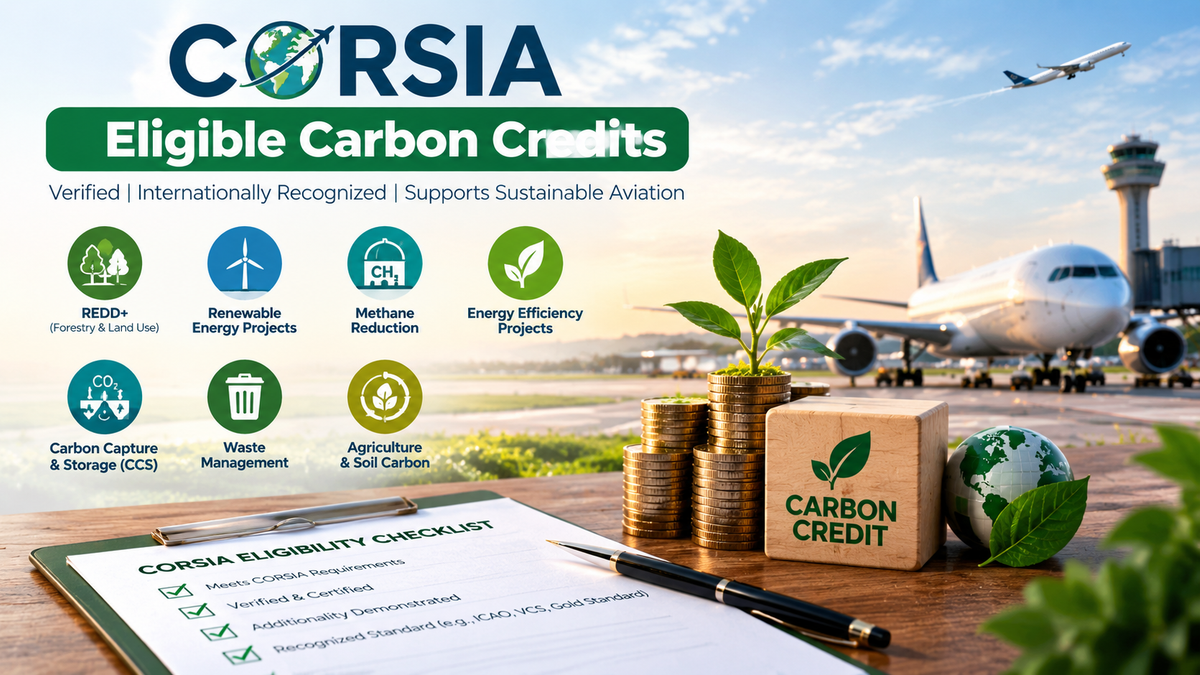
Not every carbon credit can be used for aviation compliance. A credit may be certified, independently verified and widely traded, and still fall short of what airlines need under the Carbon Offsetting and Reduction Scheme for International Aviation (CORSIA). For airline sustainability teams, procurement staff and carbon market professionals, understanding that gap is the first step toward sourcing responsibly.
This guide explains what makes CORSIA eligible carbon credits different from ordinary credits, and how buyers can approach eligibility checks in a structured, documented way.
What Makes a Carbon Credit Eligible for CORSIA?
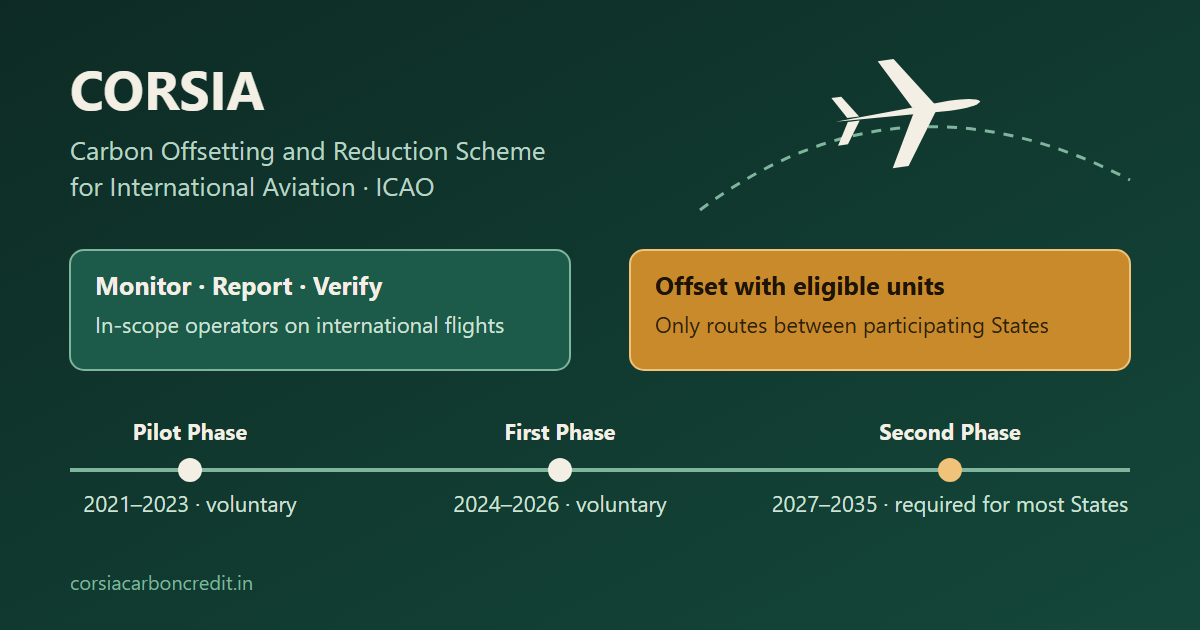
CORSIA is administered by the International Civil Aviation Organization (ICAO). Airlines with offsetting obligations must cancel eligible emissions units to cover them. Which units count is not decided by the market. It follows a defined process:
- Emissions-unit programmes apply to ICAO.
- ICAO’s Technical Advisory Body (TAB) assesses each programme against the CORSIA emissions unit criteria and makes recommendations.
- The ICAO Council decides whether a programme is approved, and for which compliance period.
- ICAO publishes the outcome in its document CORSIA Eligible Emissions Units, which is updated over time.
Two points matter here. First, TAB assesses programmes, not individual projects, developers or retailers. Second, programme approval is not the same as unit eligibility. An approved programme may issue many units, but only those that meet the conditions set out in ICAO’s document, and are labelled accordingly by the programme, can be used for CORSIA. Approvals can also differ between compliance periods, such as the pilot phase (2021–2023) and the first phase (2024–2026).
A Practical Checklist for Evaluating Eligibility
The following questions can structure a review. They are a starting point, not a substitute for the official documents.
1. Programme and unit type
Confirm that the issuing programme is approved by the ICAO Council for the compliance period you are targeting. Then check which unit types or credit categories ICAO lists for that programme. Some programmes are eligible only for certain categories, and some approvals carry conditions.
2. Project and methodology
Review the project description and the methodology used. ICAO’s document may specify which project types or methodologies are eligible under a given programme, so a credit from an approved programme can still be excluded on this basis.
3. Vintage and compliance period
Each programme’s entry specifies the eligible vintage range, meaning the period in which the emission reductions occurred. A unit’s vintage must match what ICAO lists for the relevant compliance period. Buyers should not assume that a unit eligible for one period is automatically eligible for another.
4. Registry records and traceability
Check the unit’s record in the programme’s designated registry. You should be able to trace its serial number, issuance details, ownership history and current status (available, transferred, cancelled). Programmes are expected to identify CORSIA eligible units within their registry systems, so look for the appropriate label.
5. Authorisation and corresponding adjustment
CORSIA’s framework addresses double counting through host-country authorisation and corresponding adjustments. Buyers should ask for evidence that the required authorisation exists and that the associated accounting steps are being addressed, in line with ICAO’s requirements and the programme’s own procedures.
6. Programme-specific conditions
Read the programme’s own rules and any conditions in ICAO’s document. Conditional approvals, additional reporting steps and specific restrictions can all affect whether a unit is usable.
Why Carbon Credit Verification Matters
Verification is what turns a claim into something a buyer can rely on. Independent verification of emission reductions, transparent registry records, and clear documentation reduce the risk of purchasing units that cannot be used. Double-counting safeguards matter especially in aviation, because the same reduction should not be claimed by both an airline and a host country. For compliance purposes, a missing document at the wrong moment can make the difference between a usable unit and an unusable one.
Common Eligibility Mistakes Buyers Should Avoid
Assuming general certification equals eligibility. Standards recognised in the voluntary market do not automatically produce CORSIA eligible emissions units. Eligibility depends on ICAO approval of the programme and on the unit meeting the specific conditions.
Relying on outdated programme lists. ICAO’s document is amended periodically, and programme approvals, conditions and eligible categories can change. A list copied from a presentation or an older article may be wrong today.
Confusing programme approval with unit eligibility. As noted above, the two are separate questions.
Ignoring vintage and period. A unit that fits one compliance period may not fit another.
Skipping authorisation checks. Missing host-country authorisation or unclear adjustment arrangements can undermine otherwise sound units.
Accepting verbal assurances. Eligibility claims should be backed by registry evidence and documentation.
How Airlines and Buyers Can Approach Due Diligence
A sensible process might look like this:
- Start with ICAO. Read the current edition of CORSIA Eligible Emissions Units and note the programme, period, categories and conditions relevant to your needs.
- Check the programme’s own documentation. Programmes publish rules, labelling procedures and registry guidance.
- Request supporting records from the seller. These typically include serial numbers, project documents, verification reports, and evidence of authorisation and adjustment arrangements.
- Verify independently in the registry. Confirm status, label and ownership yourself rather than relying only on documents provided.
- Document everything. Keep a dated record of what you checked and when, since rules and listings can change.
- Seek professional advice where needed. Legal and compliance interpretations may depend on your State’s implementation of CORSIA, so internal teams or advisers should confirm how the rules apply to your operations.
For readers who want a CORSIA-focused starting point when researching and comparing suppliers, resources covering CORSIA eligible carbon credits can help with initial market orientation. Any information found there, as with any third-party source, should be cross-checked against ICAO’s current documents and the relevant programme’s registry before a purchase decision is made.
CORSIA Eligibility and the Wider Voluntary Carbon Market
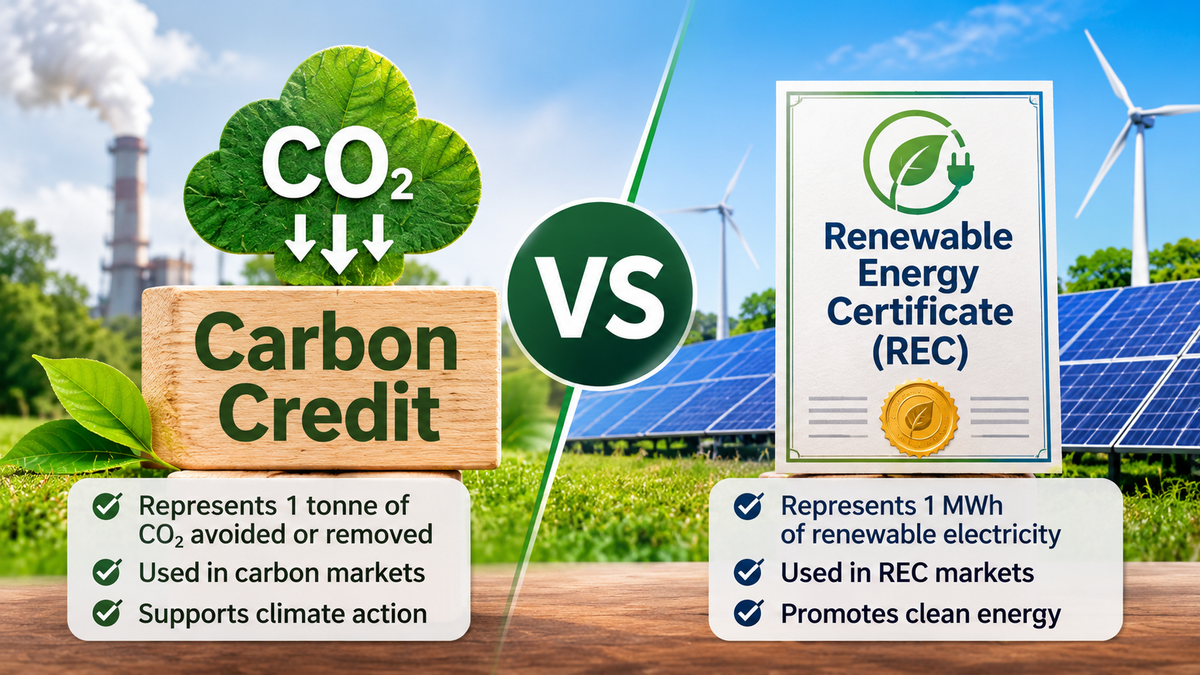
The voluntary carbon market is built around choices made by organisations and individuals who want to support climate action, and it includes a broad range of standards, project types and quality expectations. CORSIA is a regulatory framework with a specific purpose: helping international aviation address emissions above an agreed baseline through eligible units, with rules set through ICAO and implemented by participating States.
Because their purposes differ, their requirements are not interchangeable. A credit with a strong reputation in the voluntary market may not meet CORSIA’s criteria, and a CORSIA eligible unit is not automatically suited to every voluntary claim. Buyers should assess each purpose on its own terms.
Conclusion
Identifying CORSIA eligible carbon credits is a matter of verification, not assumption. The core steps are to confirm the programme’s approval for the right compliance period, check the specific unit’s type, methodology, vintage and label, verify registry records, and confirm authorisation and adjustment arrangements. Throughout, buyers should rely on current ICAO publications and programme rules rather than secondhand lists. A documented, repeatable due diligence process protects airlines and other buyers from avoidable errors and supports credibility in a market where trust is essential.
Frequently Asked Questions
1. Does an ICAO-approved programme mean every unit it issues is CORSIA eligible? No. Programme approval is a separate step. Individual units must also meet the conditions in ICAO’s eligible emissions units document, such as unit type, vintage and labelling, for the relevant compliance period.
2. Can I rely on a list of eligible programmes I found online? Only as a starting point. ICAO updates its CORSIA Eligible Emissions Units document over time, so always check the current edition on the ICAO website.
3. Why do authorisation and corresponding adjustments matter? They help prevent double counting, so the same emission reduction is not claimed by both an airline and a host country. Buyers should confirm how these requirements apply to the specific units they are considering.