 DSTechnoverse company
Carbon credits standards are the rulebooks that decide whether a project can earn carbon credits, and how many. A standard, also called a carbon-crediting programme:
- sets the methodologies for measuring emission reductions or removals
- requires independent validation and verification
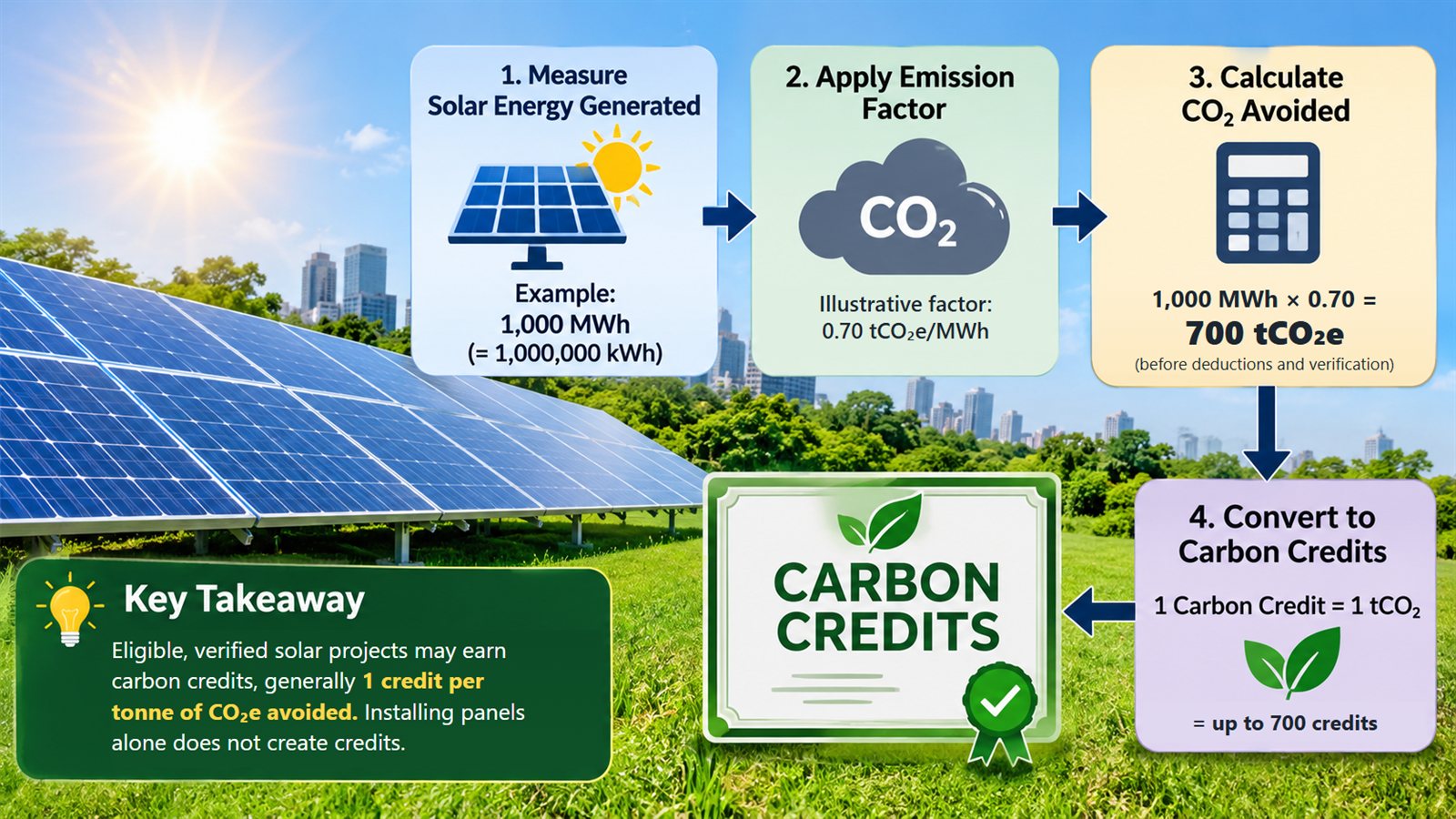
- issues credits into a registry, generally one credit per tonne of CO₂ equivalent (tCO₂e)
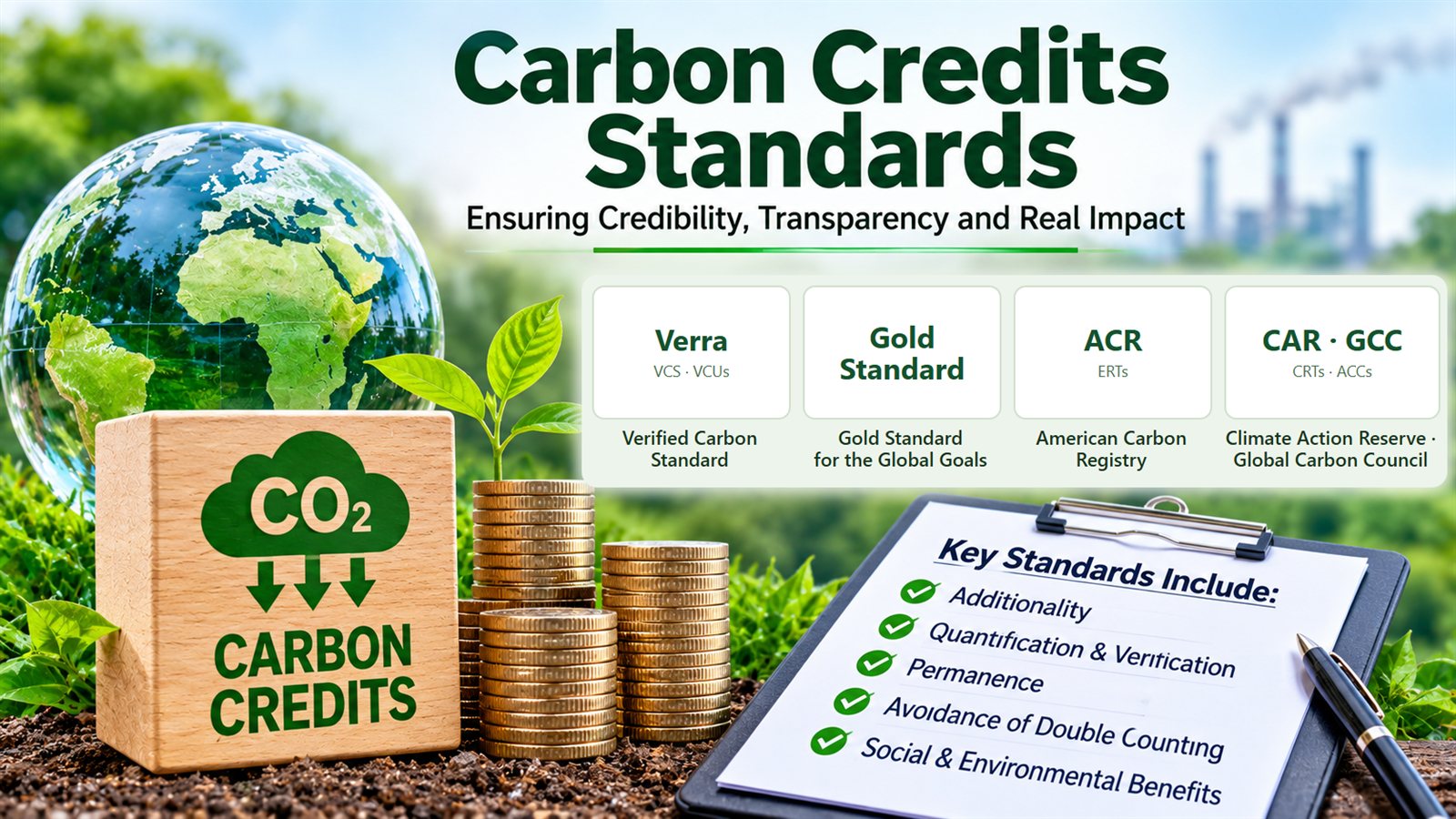
The best-known programmes are Verra's Verified Carbon Standard, Gold Standard, the American Carbon Registry (ACR), the Climate Action Reserve (CAR) and the Global Carbon Council (GCC). For how credits are used in aviation, see our CORSIA Carbon Credits resources.
Without standards, nobody could compare one tonne with another, and buyers could not trust what they were paying for. This guide explains how standards work, compares the five main programmes, and sets out how standards differ from registries, quality frameworks such as ICVCM, and CORSIA eligibility. Information reflects official sources available in November 2026.
What Are Carbon Credit Standards?
A carbon credit standard is a programme that sets the requirements a project must meet before it can earn credits. It typically:
- sets project requirements, such as eligible activities, start dates and safeguards
- approves methodologies, the step-by-step rules for calculating a baseline, measuring results and deducting leakage
- accredits independent auditors, called validation and verification bodies (VVBs)
- reviews and approves project registration and credit issuance
- runs or appoints a registry that tracks every credit
One credit generally represents one tCO₂e, under the programme's rules. Independent validation and verification make the system credible: someone other than the developer checks both the project design and its actual results. Public documents and registries support transparency and accountability.
Why Are Carbon Credit Standards Important?
Good standards:
- ensure accurate measurement, through approved, conservative methodologies
- keep methods consistent across similar projects
- test additionality, so credits are not issued for things that would have happened anyway
- reduce over-crediting, through realistic baselines and uncertainty deductions
- address leakage and permanence, including buffer pools for nature-based projects
- require independent verification
- prevent double counting, through registries and unique serial numbers
- make registries transparent, with public project records
- build buyer confidence and support credible climate action
Credits without reliable measurement and verification can overstate their impact. Buyers' climate claims are then misleading, and the market's credibility suffers.
What Are the Major Carbon Credit Standards?
1. Verra Verified Carbon Standard (VCS)
Verra is a US-based non-profit that runs the Verified Carbon Standard (VCS), the largest voluntary programme by volume of credits issued.
- Methodologies: Verra maintains a large methodology library and also accepts some methodologies from other programmes, such as the UN's Clean Development Mechanism.
- Process: projects are validated by Verra-approved VVBs, registered, monitored and verified before issuance.
- Credits: Verified Carbon Units (VCUs), recorded in the Verra Registry.
- Project categories: forestry and land use (including REDD+), renewable energy, cookstoves, waste, agriculture and industrial processes.
- Add-on labels: such as the Climate, Community & Biodiversity (CCB) Standards and SD VISta, which show co-benefits.
Official website: verra.org
2. Gold Standard
Gold Standard was established in 2003 by WWF and other environmental organisations. Its current programme, Gold Standard for the Global Goals, combines climate impact with sustainable development.
- Focus: projects must show measurable contributions to the UN Sustainable Development Goals (SDGs) beyond climate, along with strong stakeholder consultation.
- Process: "design certification" (similar to validation) and "performance certification" (similar to verification) by approved auditors.
- Credits: recorded in the Gold Standard Impact Registry.
- Project categories: cookstoves, water purification, biogas, community renewable energy and afforestation.
Official website: goldstandard.org
3. American Carbon Registry (ACR)
ACR was founded in 1996 as one of the first private greenhouse gas registries in the United States, and is part of the non-profit Winrock International.
- Methodologies: ACR approves its own methodologies through a public process.
- Process: validation and verification by accredited third parties.
- Credits: Emission Reduction Tonnes (ERTs), recorded in the ACR Registry.
- Project categories: forestry, industrial gases, landfill and agricultural methane, and land use.
- Markets: voluntary buyers, plus a role as an offset project registry in California's compliance cap-and-trade programme.
Official website: acrcarbon.org
4. Climate Action Reserve (CAR)
The Climate Action Reserve grew out of the California Climate Action Registry, set up in 2001. It uses standardised protocols instead of project-by-project methodologies.
- Protocols: define eligibility, baselines and quantification for a project type, reducing case-by-case judgement.
- Process: monitoring and verification by accredited verification bodies.
- Credits: Climate Reserve Tonnes (CRTs), tracked in the Reserve's registry.
- Project categories: forestry, landfill gas, livestock methane, ozone-depleting substance destruction and others, mainly in the US and Mexico.
- Markets: voluntary buyers, plus a role as an offset project registry for California's compliance programme.
Official website: climateactionreserve.org
5. Global Carbon Council (GCC)
The Global Carbon Council is a Qatar-based programme launched by the Gulf Organisation for Research and Development. It serves projects mainly in the Middle East, Asia and Africa.
- Methodologies: its own standards and methodologies, alongside accepted methodologies from other recognised programmes.
- Process: project registration, monitoring and verification by approved verifiers.
- Credits: Approved Carbon Credits (ACCs), recorded in the GCC Registry.
- Project categories: renewable energy, industrial efficiency, waste and other activities, including many South Asian projects.
Official website: globalcarboncouncil.com
Each programme has its own requirements, and their rules change. Check current official documentation, and do not assume a programme's credits suit every market.
Comparison of Major Carbon Credit Standards
| Factor | Verra (VCS) | Gold Standard | ACR | CAR | GCC |
|---|---|---|---|---|---|
| Main focus | Broad, largest voluntary programme | Climate plus SDG impact | US-rooted, methodology-based | Standardised protocols, mainly North America | Middle East, Asia, Africa |
| Credit unit | VCU | Gold Standard credits | ERT | CRT | ACC |
| Methodology approach | Large methodology library | Methodologies plus SDG requirements | Approved methodologies | Standardised protocols | Own and accepted methodologies |
| Audit | Approved VVBs | Design and performance certification | Accredited verifiers | Accredited verification bodies | Approved verifiers |
| Registry | Verra Registry | Impact Registry | ACR Registry | Reserve registry | GCC Registry |
| Sustainable development | Optional labels (CCB, SD VISta) | Built in | Safeguards | Safeguards | Safeguards |
| Markets | Voluntary; some compliance uses | Voluntary; some compliance uses | Voluntary; California compliance | Voluntary; California compliance | Voluntary; some compliance uses |
| CORSIA first phase (2024–2026) | Approved, with scope conditions | Approved, with scope conditions | Approved, with scope conditions | Approved, with scope conditions | Approved, with scope conditions |
CORSIA status reflects ICAO's CORSIA Eligible Emissions Units document (April 2026 edition). Approval is at programme level only. Each unit must still meet ICAO's unit-level conditions.
Our comparison of carbon standards explains how these programmes differ in day-to-day practice.
How Does Carbon Credit Certification Work?
- Identify a project that reduces or removes emissions.
- Select a programme that covers the activity and location.
- Choose an approved methodology.
- Prepare documentation, such as a Project Design Document.
- Establish the baseline and demonstrate additionality.
- Complete independent validation of the design.
- Register the project with the programme.
- Monitor and measure performance.
- Complete independent verification of the results.
- Receive credits after the programme approves issuance.
- Record the credits in the registry with serial numbers.
- Transfer, sell or retire the credits.
The main participants are:
- project developers, who design and run projects
- VVBs, who audit them
- programme administrators, who set rules and approve projects and issuance
- registry operators, who keep records
Our guide to the carbon credit certification process covers each step.
What Is the Difference Between a Carbon Standard and a Carbon Registry?
Carbon crediting standard
- sets programme rules and requirements
- defines methodologies and project eligibility
- sets monitoring and verification requirements
Carbon registry
- records issued credits with unique serial numbers
- tracks ownership and transfers
- records retirement or cancellation
- supports transparency and traceability
The two are related but not identical. Many programmes run their own registry, sometimes through a technology provider. But the standard decides whether a credit should exist, while the registry records where it is and what happened to it.
What Makes a Carbon Credit Standard High Quality?
- Additionality: rigorous tests that the project needed carbon finance
- Accurate quantification: conservative baselines and calculations
- Independent validation and verification: competent, impartial auditors
- Permanence: protection against reversal, such as buffer pools
- Leakage prevention: emissions displaced elsewhere are deducted
- Transparency: public rules and project documents
- No double counting: across registries and with national accounts
- Robust monitoring: clear, measurable data requirements
- Environmental and social safeguards: protecting communities and ecosystems
- Public documentation and registry traceability
Even under a strong standard, quality varies between projects and methodologies. Buyers should assess the actual project and the issued credit, not just the programme name.
What Is ICVCM and How Does It Relate to Carbon Credit Standards?
The ICVCM, the Integrity Council for the Voluntary Carbon Market, is an independent governance body. It published the Core Carbon Principles (CCPs) in 2023 as a global benchmark for high-integrity credits. It:
- assesses carbon-crediting programmes against its programme-level criteria. Several major programmes, including Verra, Gold Standard, ACR and the Climate Action Reserve, have been assessed as CCP-Eligible.
- assesses methodology categories, approving some and rejecting others. For example, it decided in 2024 that methodologies for most grid-connected renewable energy did not meet its additionality bar.
- allows CCP labels on credits from approved programmes and categories
ICVCM is a quality assessment framework. It is not a carbon credit standard that issues credits, and not a registry. CCP status changes as assessments continue, so check icvcm.org for current decisions.
What Is the Relationship Between Carbon Credit Standards and CORSIA?
CORSIA, ICAO's Carbon Offsetting and Reduction Scheme for International Aviation, requires airlines with offsetting obligations on routes between participating States to cancel eligible emissions units.
- ICAO's Emissions Unit Eligibility Criteria cover programme design and credit integrity.
- The Technical Advisory Body (TAB) assesses applicant programmes against those criteria.
- The ICAO Council approves programmes for specific compliance periods.
- Programme approval is not unit approval. Each unit must also fall within the approved scope and vintage window. For the first phase, that generally means activities starting on or after 1 January 2016 and vintages from 2021 to 2026.
- First-phase units also need host-country authorisation with a corresponding adjustment, and a CORSIA label in the registry.
A credit certified under Verra, Gold Standard or another programme is therefore not automatically CORSIA eligible. Always check ICAO's latest official eligibility document. Our guide to CORSIA eligible carbon credits explains these checks.
Official website: icao.int/CORSIA
How Should Businesses Choose the Right Carbon Credit Standard?
- Project type and methodology: does the method suit the activity, and is it recent?
- Environmental integrity: baseline realism and conservativeness.
- Additionality and permanence: strength of the evidence, and buffer arrangements.
- Independent verification: read the verification reports.
- Registry transparency: can you trace serial numbers and retirements?
- Sustainable development benefits: if co-benefits matter to you.
- Vintage and availability: recent credits and enough volume.
- Intended use: a voluntary claim, CORSIA or another compliance scheme.
- Eligibility: for compliance uses, check programme and unit conditions.
- Documentation: retirement certificates and supporting evidence.
The cheapest credit is not always the right one. A credit that fails quality checks, or does not qualify for your purpose, can cost more in the long run.
Common Misconceptions About Carbon Credit Standards
- "All standards are the same." Their rules, methodologies, safeguards and markets differ.
- "Certified means high quality." Quality varies between projects and methodologies, even within one programme.
- "Every credit from an eligible programme qualifies for CORSIA." Unit-level conditions on scope, vintage, authorisation and labelling still apply.
- "Registries and standards are identical." One sets the rules, the other records the credits.
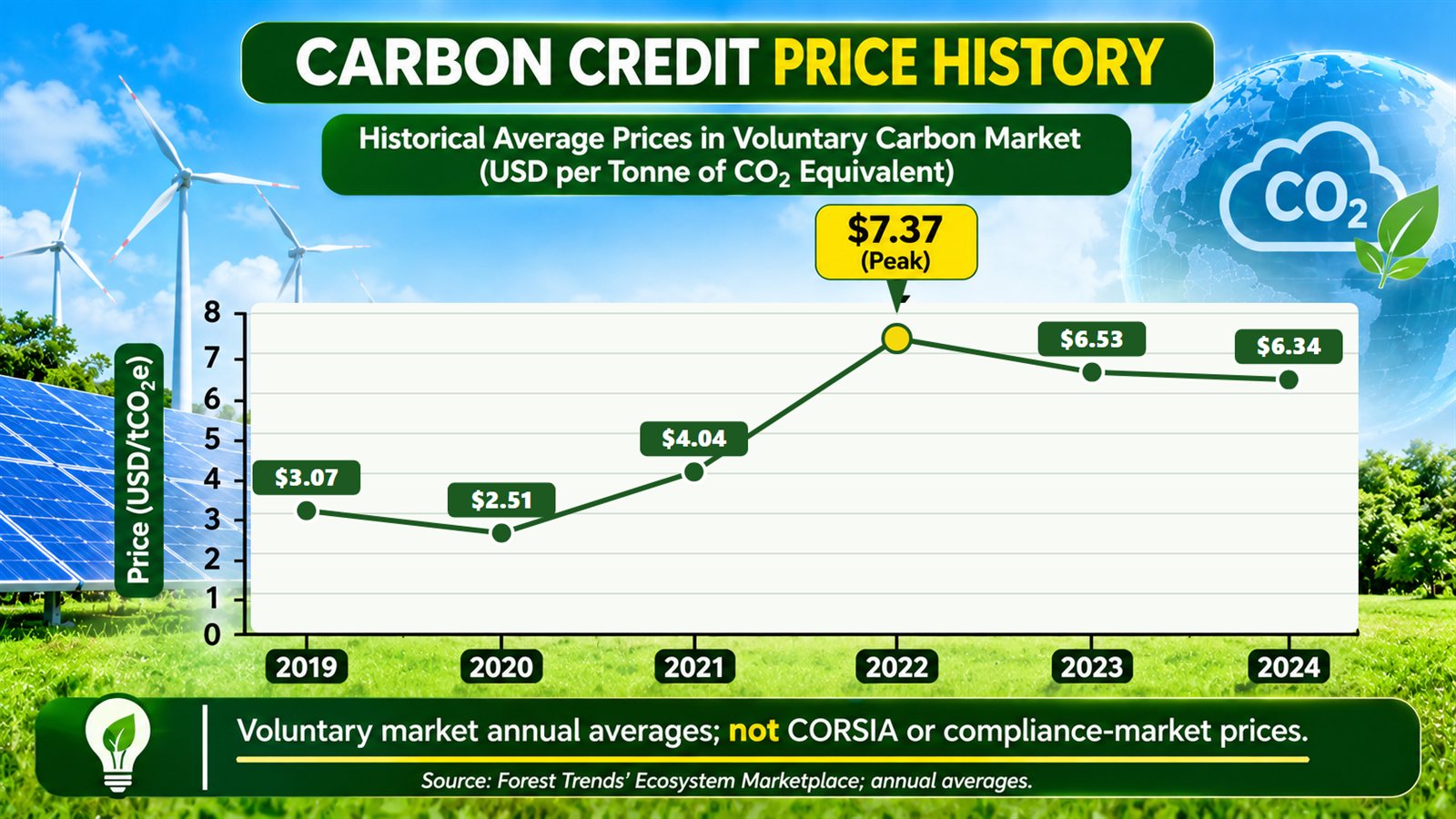
- "Certification guarantees a fixed price." Prices depend on project type, quality, vintage and demand.
- "Offsets remove the need to cut emissions." Credible strategies reduce emissions first and use credits only for what remains.
The Future of Carbon Credit Standards
Current developments
- growing demand for high-integrity credits, including CCP-labelled credits
- digital MRV, using sensors and automated data collection
- satellite-based monitoring, especially for forests
- Article 6 of the Paris Agreement, including the Paris Agreement Crediting Mechanism and host-country authorisations
- closer scrutiny of additionality and permanence, with methodology revisions
Expectations, not certainties
- more transparency in pricing and registries
- closer links between voluntary standards and compliance schemes, as CORSIA and Article 6 show
- possible consolidation of methodologies around integrity benchmarks
Frequently Asked Questions About Carbon Credit Standards
What are carbon credit standards?
They are programmes that set rules, methodologies and verification requirements for carbon projects, and issue credits, generally one per tonne of CO₂e, into a registry.
Which are the major carbon credit certification standards?
The best-known are Verra's Verified Carbon Standard, Gold Standard, the American Carbon Registry, the Climate Action Reserve and the Global Carbon Council.
What is the difference between Verra and Gold Standard?
Verra is the largest programme, covering a broad range of project types. Gold Standard requires projects to show sustainable development benefits alongside climate impact, with detailed stakeholder consultation.
Is carbon credit certification mandatory?
Not for voluntary activities in general. However, credits can only be issued and trusted if a project is certified under a recognised programme, and compliance schemes accept only certified units that meet their rules.
How does a carbon credit standard verify emission reductions?
An accredited independent verification body checks the project's monitoring data, evidence and calculations against the approved methodology, often with a site visit. The programme then reviews the result before issuing credits.
Are Verra and Gold Standard credits automatically eligible for CORSIA?
No. Both programmes are approved for the first phase with scope conditions, but each unit must also meet ICAO's conditions on scope, vintage, host-country authorisation and CORSIA labelling.
How can businesses identify a high-quality carbon credit?
Check the methodology, additionality evidence, permanence arrangements, verification reports, registry records, vintage and any ratings or CCP labels, rather than relying only on the programme name or price.
Key Takeaways
Carbon credits standards make emission reductions and removals measurable, verifiable and trustworthy:
- Verra, Gold Standard, ACR, CAR and GCC each set their own rules and methodologies, use independent auditors and keep registries.
- ICVCM benchmarks quality across programmes.
- ICAO decides which programmes and units count for CORSIA.
Choosing a standard means understanding the project's methodology, its environmental integrity, the verification and registry records, and how you intend to use the credits.
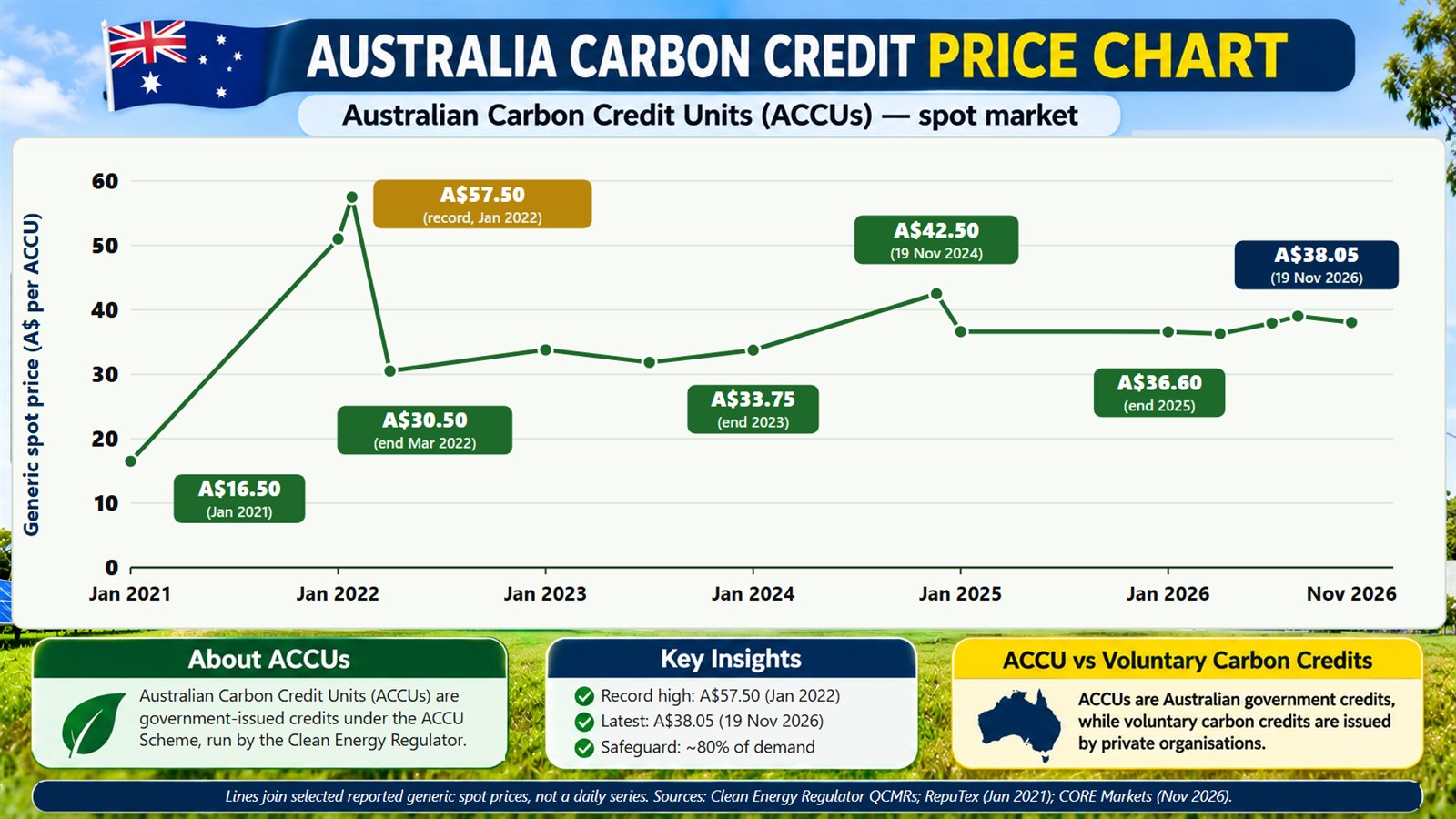
Our guide to the current value of carbon credits shows how standards and quality affect prices. For more on CORSIA, carbon credits, eligibility requirements and carbon market developments, explore the resources at CORSIA Carbon Credit.