 DSTechnoverse company
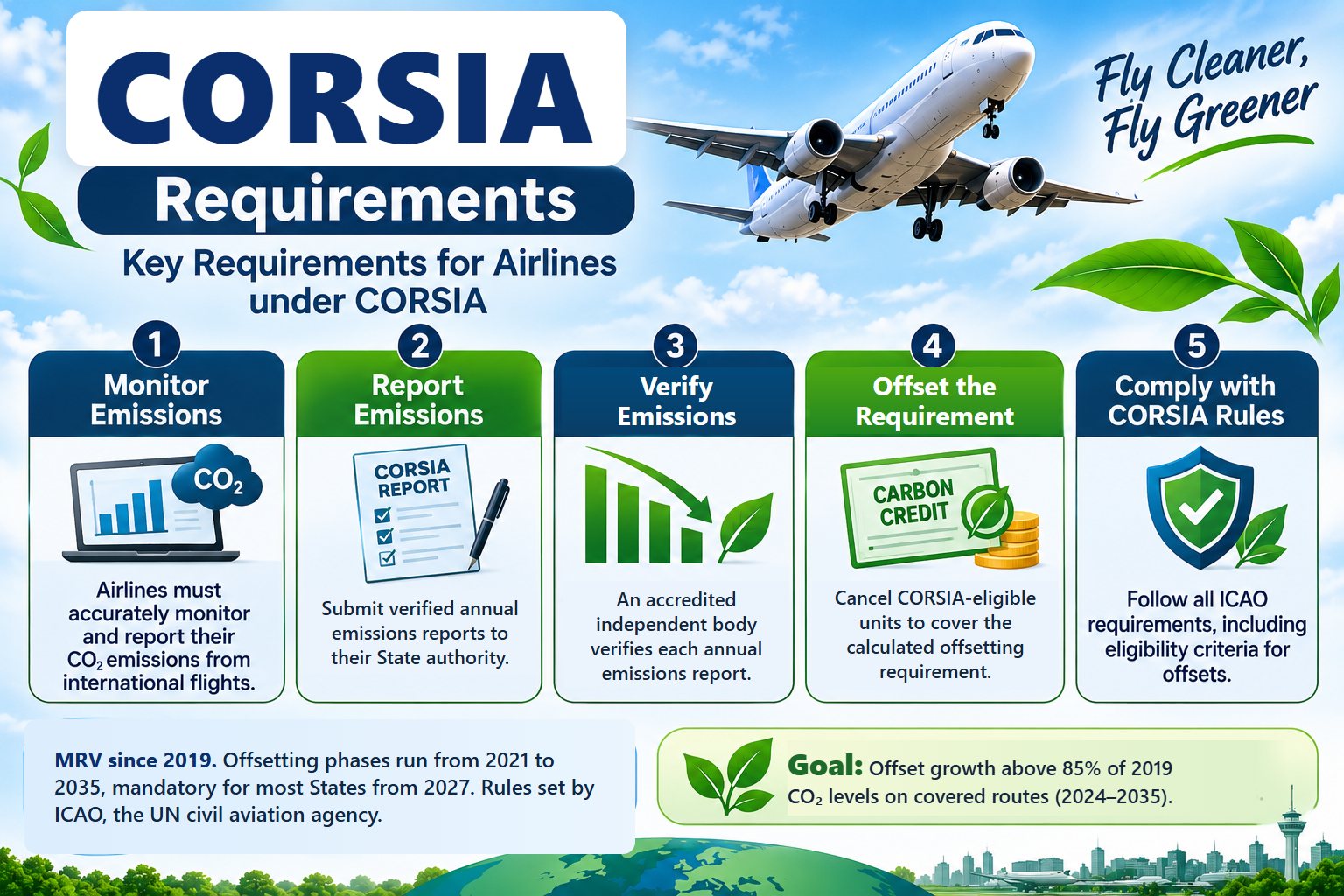
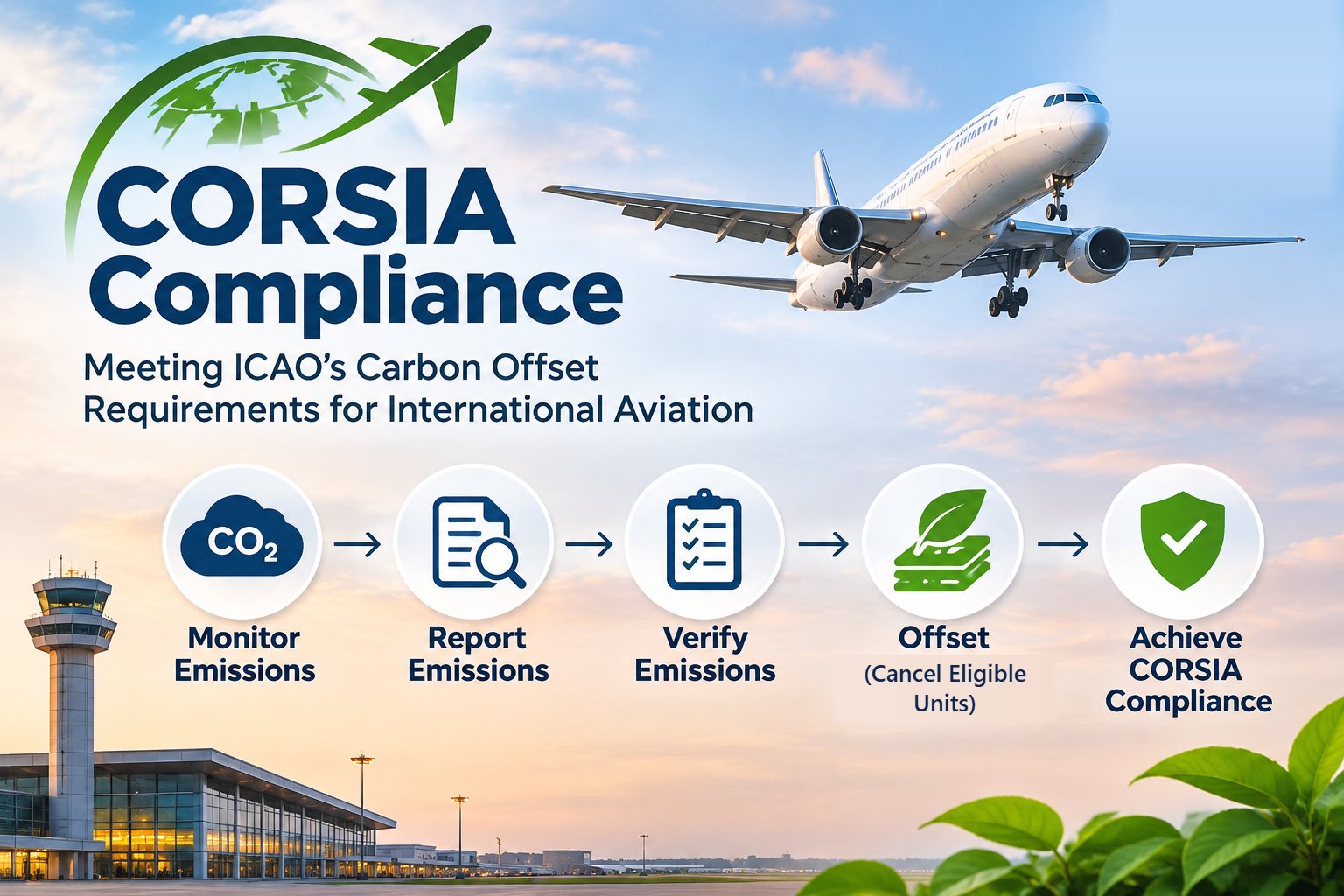
What are the CORSIA requirements? Aeroplane operators with more than 10,000 tonnes of CO₂ a year from international flights must monitor fuel use under an approved plan, report their emissions every year and have the reports verified by an accredited body. Where they fly between States that both take part in offsetting, they must also cancel CORSIA Eligible Emissions Units to cover an offsetting requirement calculated by their national authority, and report the cancellation. For more on those units, see our CORSIA Carbon Credits resources.
This guide takes each CORSIA requirement in turn, explains who it applies to and what it involves in practice, and covers phase rules, enforcement and the mistakes airlines most often make. It reflects ICAO rules and guidance available in November 2026.
What Is CORSIA?
CORSIA stands for the Carbon Offsetting and Reduction Scheme for International Aviation. It was adopted by the International Civil Aviation Organization (ICAO), the UN agency for civil aviation, in 2016. Its requirements are set out in ICAO's Standards and Recommended Practices (SARPs) in Annex 16, Volume IV to the Chicago Convention, supported by ICAO's implementation documents.
The scheme addresses CO₂ from international aviation in two ways:
- it makes airlines measure and disclose their international emissions every year
- it requires them to offset growth in those emissions above a baseline of 85% of 2019 levels, on routes between participating States
Our guide to CORSIA explained covers the scheme's background and purpose in more depth.
Why Are CORSIA Requirements Important?
- Emissions are growing. International air traffic keeps expanding, and aviation is commonly estimated to produce around 2–3% of global CO₂ emissions.
- Transparency. Without consistent monitoring and reporting, no one could measure aviation's international emissions reliably.
- International cooperation. Common requirements across ICAO Member States avoid a patchwork of national rules for flights that cross borders.
- Climate action. The requirements turn a global goal into specific obligations for each covered airline, alongside cleaner fuels and more efficient aircraft.
Who Must Follow CORSIA Requirements?
Aeroplane operators
The CORSIA airline requirements apply to operators that:
- operate international flights, between two different States
- emit more than 10,000 tonnes of CO₂ a year from those flights
- use aeroplanes with a maximum take-off mass above 5,700 kg
Each operator is attributed to one State, usually the State that issued its air operator certificate. That State oversees its compliance.
Participating States
States are responsible for:
- putting CORSIA into national law or regulation
- approving monitoring plans
- reviewing verified emissions reports
- calculating offsetting requirements
- checking cancellation reports and reporting to ICAO
In India, CORSIA is administered by the Directorate General of Civil Aviation (DGCA).
Route-based participation
Offsetting depends on State pairs:
- Flights between two participating States count towards offsetting.
- Flights involving any non-participating State are monitored and reported only.
Exemptions
- domestic flights
- humanitarian, medical and firefighting flights
- operators at or below the 10,000-tonne threshold
- new entrants, exempt from offsetting for their first three years or until they reach 0.1% of total international revenue tonne kilometres
CORSIA does not automatically apply to every airline or every flight. Our check of whether your airline is covered by CORSIA walks through each test.
What Are the Main CORSIA Requirements?
1. Emissions Monitoring Requirements
- Monitor fuel consumption on every international flight.
- Prepare and maintain an approved Emissions Monitoring Plan.
- Apply an approved monitoring method.
- Keep accurate operational records.
2. Emissions Reporting Requirements
- Prepare an annual CO₂ Emissions Report.
- Submit it to the national authority.
- Meet reporting deadlines.
- Keep supporting documentation.
3. Emissions Verification Requirements
- Have each report independently verified.
- Use an accredited verification body.
- Ensure data accuracy and consistency.
- Correct errors and discrepancies before submission.
4. Offsetting Requirements
- Understand any offsetting obligation calculated by the State.
- Determine how many emissions units are needed.
- Select eligible emissions units.
- Complete cancellation and report it before the deadline.
Requirements 1 to 3 apply to every covered operator. Requirement 4 applies only to emissions on covered routes.
CORSIA Emissions Monitoring Requirements
Monitoring plans
Before monitoring, each operator submits an Emissions Monitoring Plan to its national authority. It typically describes:
- the operator's identity and attributed State
- its fleet and types of operation
- the fuel use monitoring method it will use
- data flows, controls and how data gaps are handled
The plan must be updated when operations change significantly, such as a new fleet type or a change of method.
Approved fuel measurement methods
ICAO's rules set out several fuel use monitoring methods, including:
- Method A and Method B, based on the fuel in the tanks and fuel uplifted around consecutive flights
- Block-off / Block-on, based on fuel measured when the aircraft leaves and arrives at the gate
- Fuel Uplift, based on the fuel loaded before each flight
- Fuel Allocation with Block Hour, which estimates fuel from block hours
Smaller emitters may use ICAO's CORSIA CO₂ Estimation and Reporting Tool (CERT), within thresholds set in the rules.
Data collection and recordkeeping
Airlines draw fuel data from fuel slips, flight management systems and technical logs. Good practice includes reconciling these sources, documenting estimates for missing data, and keeping records for the retention period required by ICAO rules and the national authority.
Calculating CO₂
CO₂ = Fuel burned (tonnes) × Fuel conversion factor
ICAO's factor for Jet-A and Jet-A1 fuel is 3.16 tonnes of CO₂ per tonne of fuel. For example, a widebody flight burning 65 tonnes of Jet-A1 emits about 65 × 3.16 = 205.4 tonnes of CO₂ (illustrative figures).
Different types of operations
The same monitoring rules apply across scheduled, charter and cargo flights, as long as they are international and the operator is in scope. Operators with mixed fleets may use different approved methods for different aircraft, if their monitoring plan says so.
CORSIA Reporting Requirements for Airlines
Annual emissions reporting
Each year, the operator submits a verified Emissions Report covering:
- total CO₂ from international flights
- emissions broken down by State pair
- the number of flights
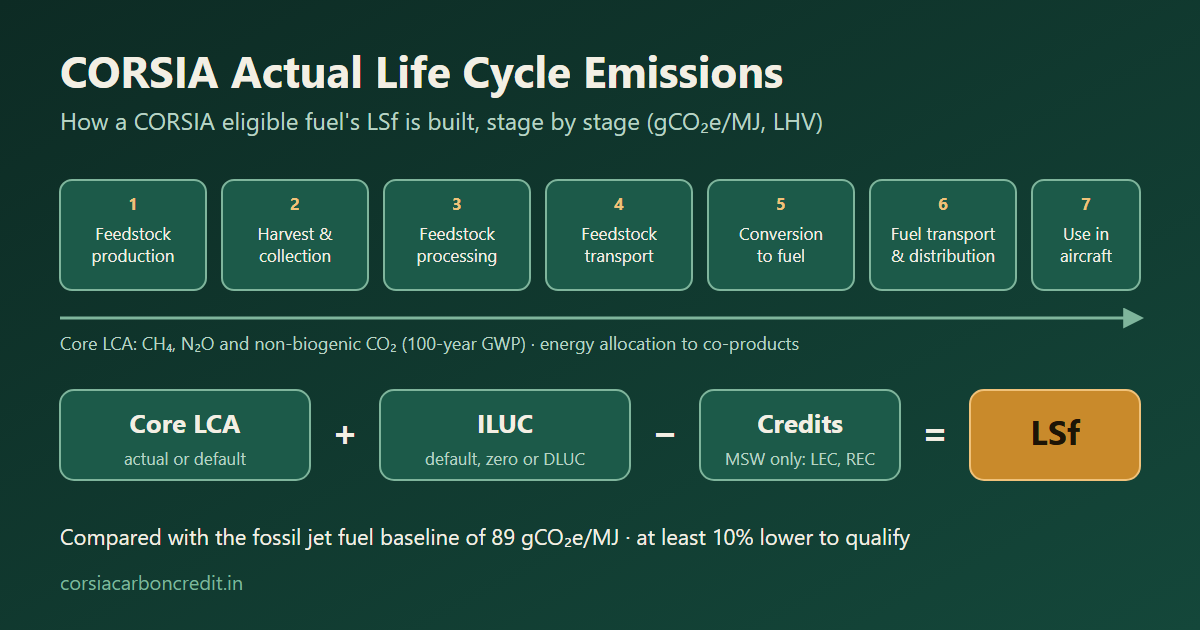
- any claims for CORSIA eligible fuels
Operator and State responsibilities
- Operators prepare and submit reports, with verification.
- States review reports, may request corrections and aggregate the data.
- ICAO receives State-level data and publishes information through its central registry.
Deadlines
Operators generally submit the verified Emissions Report to their national authority by 30 April of the following year. National authorities may set their own detailed timelines within ICAO's framework, so airlines should follow their State's published dates. Our CORSIA compliance calendar shows how the annual dates fit together.
Formats and documentation
ICAO provides reporting templates, and many States require them. Supporting documents include the monitoring plan, verification report and data used for any eligible fuel claims.
CORSIA Verification Requirements
Why verification is needed
Verification gives the State, ICAO and other airlines confidence that reported emissions are complete and accurate. Offsetting obligations depend on these numbers.
Verification body responsibilities
- Verification bodies must be accredited, under international standards for greenhouse gas validation and verification, by a national accreditation body.
- They must be independent of the operator.
- They check the report against the approved monitoring plan and ICAO's rules.
What verifiers review
- fuel data and its sources
- the monitoring method applied
- calculations and conversion factors
- State-pair allocation of flights
- data gaps and how they were filled
Discrepancies and corrections
If verifiers find material misstatements, meaning errors large enough to affect the result, the operator must correct them before the report is accepted. Minor issues may be noted for improvement.
Outputs and oversight
The verifier issues a verification report with its opinion, which accompanies the operator's Emissions Report. The national authority then carries out its own order of magnitude check and review.
CORSIA Carbon Credit and Offsetting Requirements
Determining the offsetting obligation
The national authority calculates the requirement:
Offsetting requirement = Covered emissions × Growth factor − Reductions from CORSIA eligible fuels
- Covered emissions: emissions on routes between participating States.
- Growth factor: under current rules, fully sectoral until 2032, then 85% sectoral and 15% individual from 2033 to 2035, using values published by ICAO.
Illustrative example (hypothetical values): an airline has 240,000 tonnes of covered emissions in a year. With an assumed sectoral growth factor of 0.03, its gross requirement is 7,200 tonnes. After claiming 200 tonnes of eligible fuel reductions, it must cancel 7,000 eligible units for that year.
What eligible emissions units are
CORSIA Eligible Emissions Units are carbon credits from programmes approved by the ICAO Council, on the advice of the Technical Advisory Body, that meet the unit conditions for the compliance period.
Unit-level conditions
For the first phase (2024–2026), these generally include:
- activity start date on or after 1 January 2016
- vintages from 2021 to 2026
- host-country authorisation, through a Letter of Authorisation
- a corresponding adjustment under Article 6 of the Paris Agreement, so the host country does not also count the reduction, or an approved compensation arrangement where a programme allows it
- a CORSIA label in the programme's registry
Registry transfers and cancellation
Units are transferred into the airline's registry account, or cancelled on its behalf, and then cancelled with a record that they are used for CORSIA, by which operator and for which compliance period. The operator then submits an Emissions Unit Cancellation Report to its national authority.
Ordinary voluntary carbon credits are not automatically eligible for CORSIA compliance. Our guide to CORSIA eligible emissions units lists the approved programmes and their conditions.
CORSIA Requirements for Different Compliance Phases
Pilot Phase (2021–2023)
- State participation was voluntary.
- The baseline used 2019 emissions.
- Eligible units generally came from activities starting from 2016, with vintages 2016–2020.
- MRV applied to all in-scope operators throughout.
First Phase (2024–2026)
- State participation remains voluntary. More than 100 States take part.
- The baseline is 85% of 2019 emissions.
- Eligible units need vintages 2021–2026, host-country authorisation and a corresponding adjustment.
- Units for this compliance period must be cancelled by January 2028.
Second Phase (2027–2035)
- Participation is mandatory for States with significant shares of international aviation activity.
- Least developed countries, small island developing states and landlocked developing countries are exempt unless they volunteer, as are States with very small shares of activity.
- Offsetting is settled in three-year compliance periods, starting with 2027–2029.
- Unit conditions for each period are set by ICAO decisions.
How Can Airlines Meet CORSIA Requirements?
- Determine scope. Check the 10,000-tonne threshold, aircraft mass, flight types and which State pairs are covered.
- Establish a monitoring plan. Choose an approved method and have the plan approved.
- Monitor fuel consumption on every international flight.
- Calculate and report annual CO₂ emissions by State pair.
- Complete independent verification before submission.
- Determine offsetting obligations from the State's calculation.
- Source eligible units, checking programme approval, vintage, authorisation and labels.
- Cancel units and submit documentation, including the Emissions Unit Cancellation Report.
Running these steps as a continuous cycle, rather than as a once-a-year exercise, reduces the risk of last-minute problems.
What Happens If Airlines Do Not Meet CORSIA Requirements?
- Regulatory oversight. National authorities, not ICAO, enforce CORSIA against the operators attributed to them.
- Reporting and verification deficiencies. If a report is late, incomplete or fails verification, the authority can require corrections and may estimate emissions using conservative methods.
- Corrective actions. Authorities typically require operators to fix errors, update monitoring plans or improve data controls.
- Enforcement. Penalties and enforcement procedures depend on each State's national implementing rules. They can differ significantly from country to country.
There is no single, uniform CORSIA penalty. Airlines should check the enforcement provisions of their own State's legislation.
Common Mistakes When Understanding CORSIA Requirements
- Confusing reporting with offsetting. Reporting covers all international flights. Offsetting covers only routes between participating States.
- Assuming all international flights are covered by offsetting.
- Ignoring route-based participation, especially as new States join in 2027.
- Using outdated ICAO guidance or unit lists.
- Assuming all voluntary carbon credits are eligible.
- Overlooking vintage and unit-level conditions, such as authorisation and labelling.
- Failing to maintain proper records for fuel data, verification and cancellations.
Future Developments in CORSIA Requirements
Confirmed developments:
- The second phase begins on 1 January 2027, with mandatory participation for most States with significant international aviation.
- ICAO has approved emissions unit programmes for the 2027–2029 compliance period and continues to assess others.
- ICAO members adopted a long-term aspirational goal of net-zero carbon emissions from international aviation by 2050.
Possible future developments:
- updates to monitoring, reporting or unit rules through ICAO periodic reviews
- changes to emissions unit eligibility criteria for later compliance periods
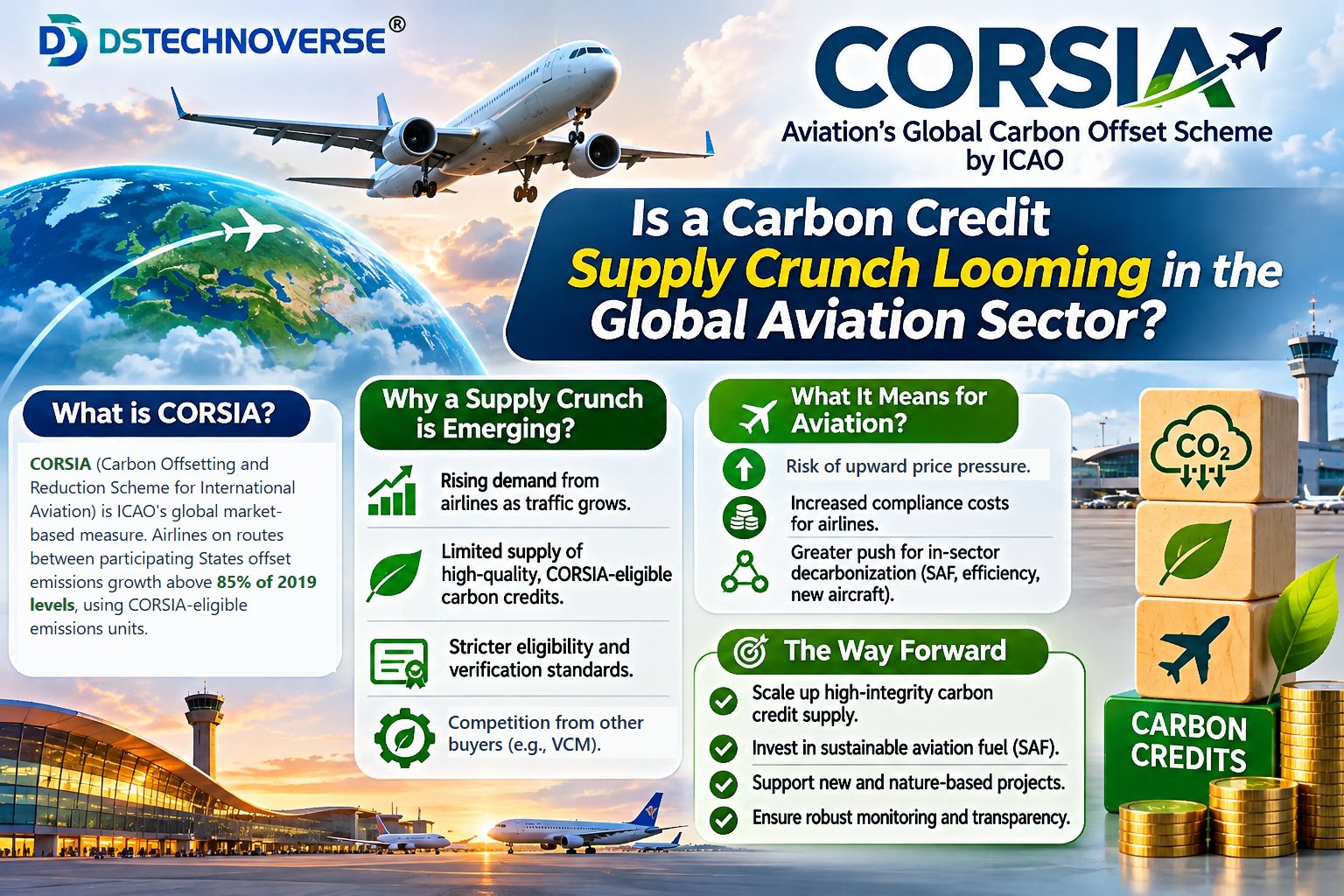
- more host countries implementing Article 6 authorisations, which could ease supply. IATA estimated first-phase demand at 200–250 million units, against about 72 million covered by compatible authorisations in August 2026.
- a larger role for sustainable aviation fuel, reducing offsetting requirements
Our step-by-step guide on how CORSIA works shows how these requirements fit together in the annual cycle.
Frequently Asked Questions
What are the main requirements of CORSIA?
Covered operators must monitor fuel use under an approved plan, report verified CO₂ emissions every year and, for routes between participating States, cancel eligible emissions units to cover their offsetting requirement.
Who needs to comply with CORSIA?
Aeroplane operators with more than 10,000 tonnes of CO₂ a year from international flights, using aeroplanes above 5,700 kg maximum take-off mass. Humanitarian, medical and firefighting flights are excluded.
What are the CORSIA reporting requirements for airlines?
Operators submit an annual verified Emissions Report to their national authority, generally by 30 April of the following year, covering emissions by State pair and any eligible fuel claims.
What is CORSIA emissions monitoring?
Recording fuel use on every international flight under an approved Emissions Monitoring Plan, using an approved method, and converting fuel to CO₂ with ICAO's conversion factors.
Does CORSIA require airlines to buy carbon credits?
Only if they have an offsetting requirement on covered routes. In that case they must acquire and cancel CORSIA eligible emissions units, not ordinary voluntary credits.
What are CORSIA eligible emissions units?
Carbon credits from ICAO-approved programmes that meet the compliance period's conditions, including vintage, host-country authorisation and a CORSIA label in the registry.
What are the three phases of CORSIA?
The pilot phase (2021–2023) and first phase (2024–2026), with voluntary State participation, and the second phase (2027–2035), when participation becomes mandatory for most large aviation States.
How do airlines calculate CORSIA offsetting requirements?
The national authority multiplies the airline's emissions on covered routes by ICAO's growth factor, then subtracts reductions from CORSIA eligible fuels.
What happens if an airline does not meet CORSIA requirements?
Its national authority can require corrections and apply enforcement measures under national law. Penalties are set by each State and are not uniform.
Are CORSIA requirements mandatory for all international airlines?
No. Monitoring and reporting apply to operators above the thresholds. Offsetting applies only to routes between participating States, and some flights and new entrants are exempt.
Conclusion
CORSIA requirements fall into four areas: monitoring fuel use under an approved plan, reporting annual emissions, verifying those reports independently and, where routes are covered, offsetting growth by cancelling eligible emissions units. The first three apply to every covered operator. The fourth depends on which States take part, and becomes much wider from 2027.
Airlines that keep accurate fuel data, maintain up-to-date monitoring plans, plan verification early and check every unit's eligibility will find compliance manageable. Relying on outdated guidance or assuming any carbon credit will do is where problems start.
To learn more about CORSIA eligible units and airline compliance, explore the resources at CORSIA Carbon Credit.
Sources
- ICAO – CORSIA Eligible Emissions Units
- ICAO – CORSIA Eligible Emissions Units document (April 2026)
- ICAO – CORSIA States for Chapter 3 State Pairs
- EASA – ICAO Carbon Offsetting and Reduction Scheme for International Aviation (CORSIA)
- IATA – CORSIA fact sheet
- UNFCCC – Article 6 of the Paris Agreement
- IATA / EuropaWire – ICAO joins alliance to address CORSIA supply shortfall (13 October 2026)