 DSTechnoverse company
What Is a Carbon Credit? Meaning and Definition
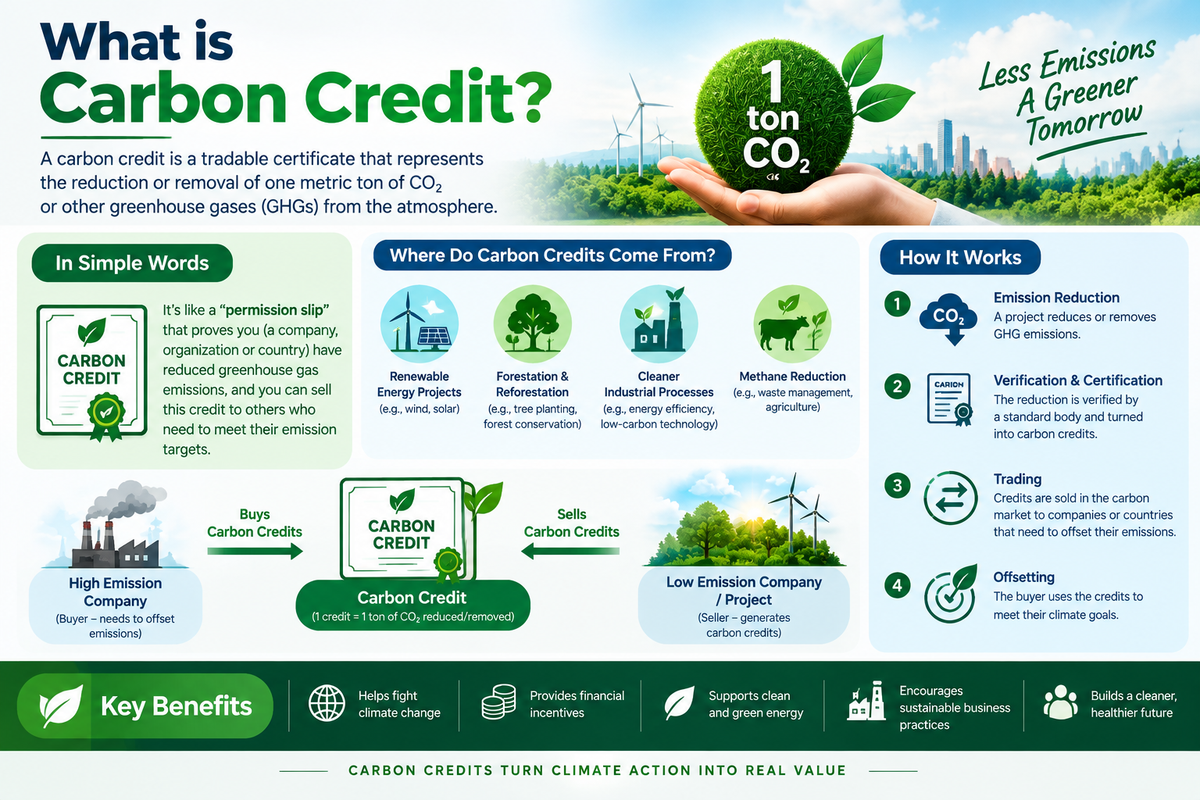
A carbon credit is a tradable unit that commonly represents one metric tonne of carbon dioxide equivalent (CO₂e) reduced, avoided or removed from the atmosphere under a specified carbon crediting framework. CO₂e is a standard measure that converts different greenhouse gases, such as methane, into the amount of CO₂ with the same warming effect.
The exact meaning of a carbon credit depends on the programme or regulation that issues it. Each framework sets its own rules on eligible activities, accounting methods and issuance conditions. A credit is also different from a general environmental claim or a company’s own estimate of savings, because it is issued only after the framework’s checks are met.
Cutting emissions versus compensating for them
Reducing emissions at the source means a business or household emits less in the first place, for example by switching to efficient equipment or cleaner energy. Using a carbon credit means funding a reduction or removal somewhere else to compensate for emissions that still occur.
Credits can support climate action by directing finance to eligible projects. They do not erase the buyer’s own emissions, and buying them does not by itself make an organisation carbon neutral.
How Do Carbon Credits Work?
The details vary by programme, and not every project qualifies. The typical lifecycle runs as follows:
- Project design. A developer designs an activity that could reduce or remove emissions, such as capturing methane or restoring forest.
- Baseline and methodology. The developer estimates what emissions would have been without the project, using a methodology approved by the programme.
- Additionality and quality tests. The project must show the reduction would not have happened without carbon finance. Other criteria, such as permanence and leakage, apply where relevant.
- Monitoring. The developer measures project activity and outcomes over time.
- Validation and verification. Independent, accredited bodies check the project design and the reported results where the programme requires it.
- Issuance. The programme issues credits with unique serial numbers into a registry.
- Transfer and retirement. Credits are bought and moved between registry accounts. When a buyer uses one, it is retired so it cannot be used or claimed again.
An illustrative example
This is a hypothetical example, not real project data. Suppose a livestock cooperative installs digesters that capture methane from manure. Under the approved methodology, the baseline is 10,000 tCO₂e per year, project emissions are 2,500 tCO₂e, and a leakage deduction (emissions shifted elsewhere) is 500 tCO₂e. The net reduction is 7,000 tCO₂e, so a verifier could confirm it and the registry could issue up to 7,000 credits for that period.
What Are the Main Types of Carbon Credit Projects?
Eligible activity types depend on the programme and methodology. Credits fall into two broad groups. Avoided or reduced emissions credits stop emissions that would otherwise occur. Removal credits take CO₂ out of the atmosphere.
Renewable energy. Where a methodology allows, a project that displaces fossil-fuel power on the grid may earn credits. Many newer methodologies restrict eligibility because renewables are now often commercially viable on their own.
Methane capture and destruction. Landfills, livestock operations and wastewater plants emit methane. Capturing it and burning or using it avoids a potent greenhouse gas.
Forest conservation and improved forest management. These activities reduce emissions by preventing deforestation or by changing how forests are managed. They are generally classed as avoided or reduced emissions.
Afforestation and reforestation. Newly planted or restored trees absorb CO₂ as they grow, which makes these removal projects. Planting trees does not automatically generate credits. The project must meet the methodology’s rules.
Energy efficiency. Efficient cookstoves, lighting or industrial equipment reduce fuel use and emissions compared with the baseline.
Agricultural emissions reduction. Practices such as improved rice water management can cut methane or nitrous oxide, depending on the methodology.
Technological and nature-based removal. Examples include direct air capture with storage, biochar, and mangrove or soil carbon projects. Their costs and measurement challenges differ widely.
A project’s integrity depends on additionality, accurate measurement, monitoring and verification. Permanence matters for removals, because stored carbon can be released again by fire or disease, and programmes often hold back buffer credits to cover such reversals. Leakage matters wherever activity can simply move elsewhere.
What Is the Difference Between Carbon Credits, Carbon Offsets and Carbon Allowances?
These terms are often mixed up, and usage varies by context.
- Carbon credits are units issued under a crediting programme for eligible reductions or removals.
- Carbon offsets is a common term for credits used to compensate for emissions. Many people use it interchangeably with “carbon credits.”
- Carbon allowances are permits to emit a set amount of greenhouse gases under a regulated emissions-trading system. They are created by a regulator’s cap, not by a project.
- Carbon credit certificates are documents or registry entries that represent units under a particular scheme. The exact meaning depends on that scheme.
Voluntary and compliance markets
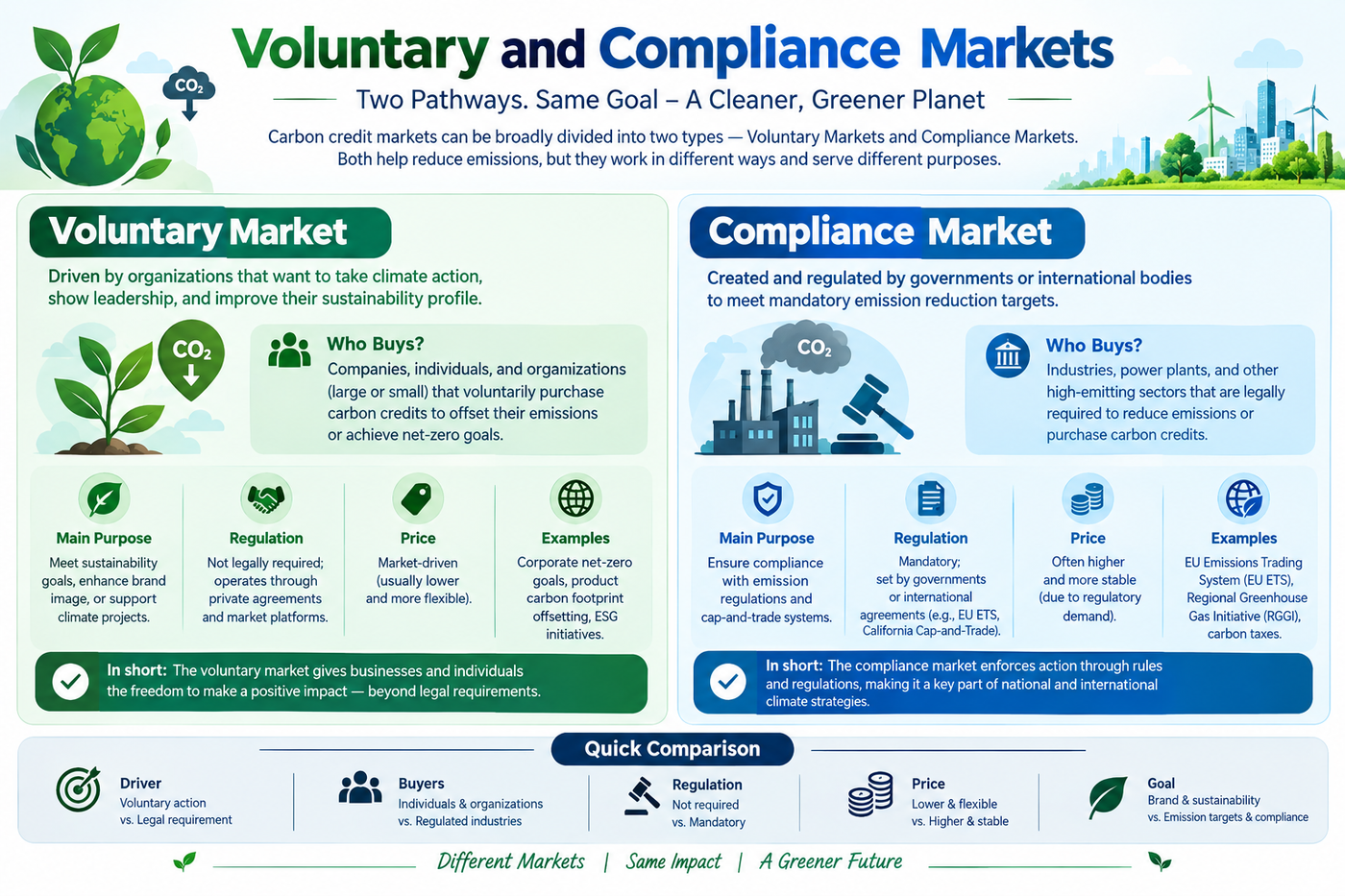
In the voluntary carbon market, companies and individuals buy credits by choice, often for climate targets. Compliance markets are created by law, and participants must meet legal obligations.
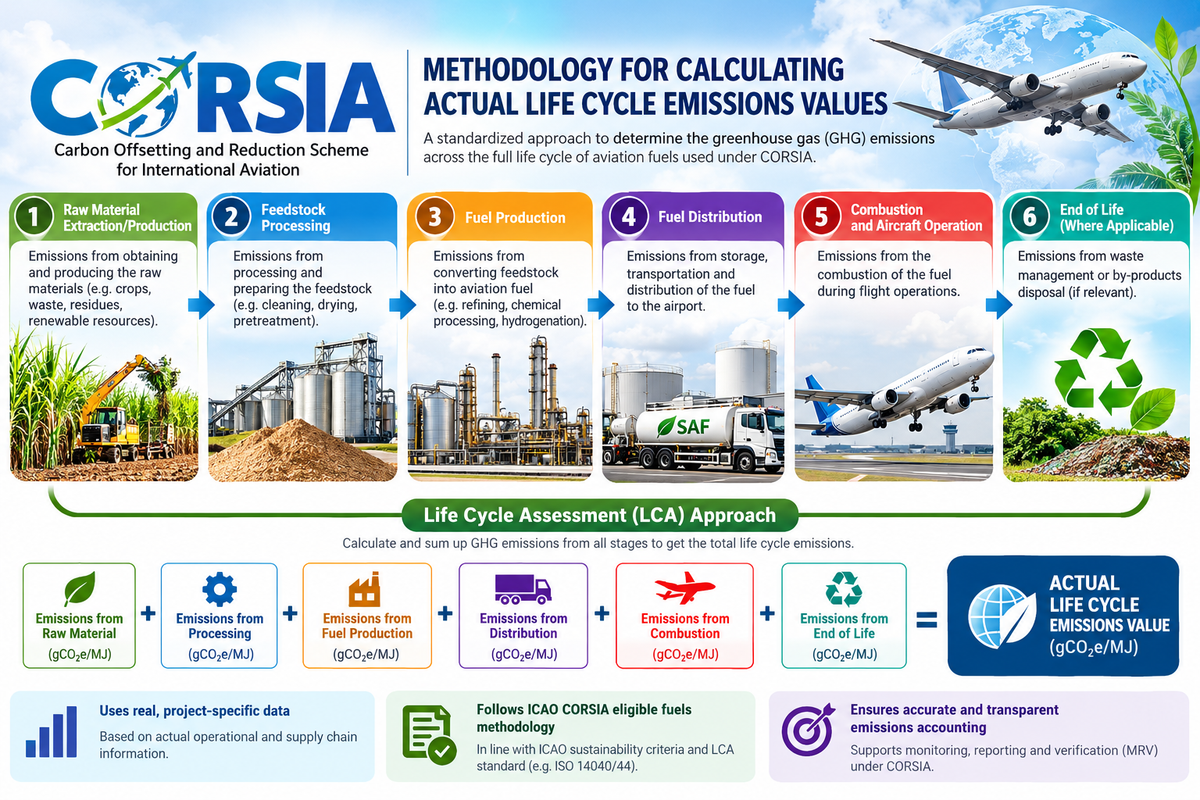
India’s Carbon Credit Trading Scheme is a compliance market administered by the Bureau of Energy Efficiency. It issues its own carbon credit certificates to regulated entities that beat their targets. ICAO’s CORSIA is a separate international scheme for airlines. The two have different rules and purposes.
A credit accepted in one programme is not automatically eligible for another. CORSIA eligibility depends on ICAO requirements, approved programmes, eligible units and vintage rules, among other conditions.
Why Are Carbon Credits Important and How Can Buyers Evaluate Them?
Credits can channel finance to eligible climate projects that might not otherwise go ahead. They work best as one part of a wider strategy in which a buyer first reduces its direct emissions wherever feasible. Credits then address what remains, and they should be described accurately in any public claim.
How to assess quality
Quality varies widely, so buyers can check:
- the crediting programme and methodology
- additionality and how the baseline was set
- monitoring, verification and registry records
- permanence and reversal risks for removal projects
- leakage and double-counting safeguards
- host-country authorisation and corresponding adjustments, where applicable
- vintage (the year of the reduction), retirement records and fit for the intended use
A corresponding adjustment is an accounting step under international climate rules. A host country adjusts its own emissions inventory when a credit is used by another party, so the same tonne is not counted twice. It is not a universal requirement for every voluntary credit, but it is central to some uses, such as CORSIA.
Labels can help. The Integrity Council for the Voluntary Carbon Market (ICVCM) awards its Core Carbon Principles label to credits from approved programmes and methodologies. Even so, project-level due diligence still matters. See this comparison of carbon standards for how major programmes differ.
How CORSIA Carbon Credit Can Help
CORSIA Carbon Credit is an independent marketplace and advisory desk run by DSTechnoverse in Indore. It is not a regulator and is not affiliated with ICAO. Its CORSIA services cover emissions monitoring plans, annual reports and offsetting calculations for aircraft operators. They also cover sourcing eligible units, pre-purchase checks and registry cancellation. For project developers, the desk screens projects against ICAO-approved programmes and checks host-country authorisation.
For aviation use, a unit must come from an ICAO-approved programme, fall within the permitted vintage window and carry host-country authorisation with a corresponding adjustment. The CORSIA eligible units checklist walks through these tests. Marketplace listings are indicative and subject to confirmation of availability, eligibility and registry status. Not every credit listed is CORSIA-eligible, and a purchase alone does not guarantee compliance or carbon neutrality.
If you are comparing options, you can browse the carbon credit marketplace or get in touch to talk through your requirements.
Frequently Asked Questions
1. What is a carbon credit in simple words? A carbon credit is a tradable unit that represents one tonne of CO₂e reduced, avoided or removed under a specific crediting framework. It is issued only after the relevant rules and checks are met.
2. How does a carbon credit work? A project cuts or removes emissions, and independent bodies verify the result. A registry then issues credits, which buyers can purchase. When used, the credit is retired so it cannot be claimed again.
3. How much CO₂ does one carbon credit represent? One credit commonly represents one metric tonne of CO₂e. Some programmes and units are defined differently, so check the rules of the scheme that issued it.
4. What is the difference between a carbon credit and a carbon offset? The terms overlap. “Carbon credit” usually refers to the issued unit, while “carbon offset” usually describes using that credit to compensate for emissions. Usage varies by context.
5. Are all carbon credits eligible for CORSIA? No. CORSIA units must come from an ICAO-approved programme, fall within eligible vintages and meet host-country authorisation and corresponding adjustment conditions. Most voluntary credits do not meet all of these.