 DSTechnoverse company

What is carbon trading and carbon credit?
- Carbon trading is the buying and selling of units that represent greenhouse gas emissions, which puts a price on carbon.
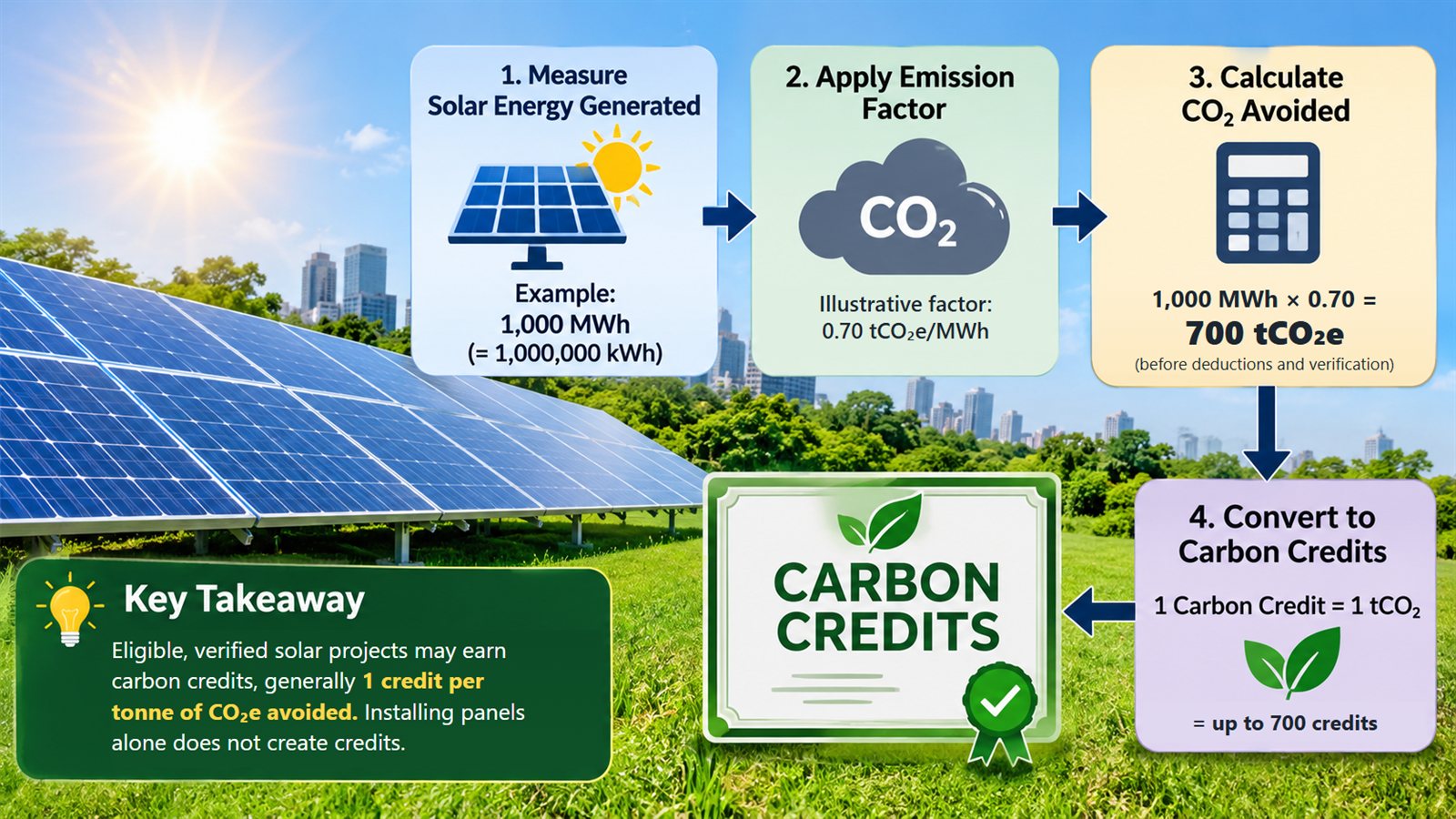
- A carbon credit is one type of tradable unit. It generally represents one tonne of CO₂ equivalent (tCO₂e) that a verified project has reduced or removed.
Carbon trading also includes emissions allowances, which are permits to emit issued by governments under a cap. Credits and allowances work differently. For aviation's carbon market, see our CORSIA Carbon Credits resources.
This guide explains each concept, how trading works step by step, the main market types, what drives prices and how CORSIA fits in.
What Is Carbon Trading?
Carbon trading is a market-based way to reduce greenhouse gas emissions. Instead of only setting fixed rules for each company, it creates tradable units linked to emissions and lets participants buy and sell them.
It exists because emissions cause climate damage that is not reflected in prices. Carbon trading gives every tonne a cost:
- Companies that cut emissions cheaply can sell spare units and earn money.
- Companies that would find cutting expensive can buy units instead.
- Overall, reductions happen where they cost least.
Two kinds of unit are traded:
- Carbon allowances: permits issued by a government under an emissions cap, each allowing one tonne of emissions.
- Carbon credits: units issued for verified reductions or removals by specific projects.
Carbon trading differs from ordinary commodity trading. Nobody receives a physical product. The value comes entirely from rules: legal obligations in compliance systems, or credibility and buyer demand in voluntary markets.
Carbon trading happens in regulated compliance systems, such as the EU Emissions Trading System, and in voluntary carbon markets, where companies buy credits by choice.
What Is a Carbon Credit and How Does It Work?
A carbon credit is a certificate issued by a crediting programme, such as Verra, Gold Standard, the American Carbon Registry or the Climate Action Reserve. It generally represents one tonne of CO₂e reduced or removed under that programme's rules.
There are two main types:
- Emission reduction credits: projects prevent emissions that would otherwise occur. Examples include renewable energy replacing fossil power, methane capture at landfills, improved cookstoves that burn less wood, and industrial efficiency upgrades.
- Carbon removal credits: projects take CO₂ out of the atmosphere and store it. Examples include reforestation, biochar and direct air capture.
A credit is created in these steps:
- Quantification: the project measures its results against a baseline, meaning what would have happened without it, using an approved methodology.
- Validation: an independent auditor checks the project design.
- Verification: the auditor checks the actual results.
- Issuance: the programme issues credits into a registry, each with a unique serial number.
- Transfer and purchase: credits move between registry accounts as they are sold.
- Retirement: the final user permanently retires the credit, so it can never be used again.
Not every renewable energy or forestry project earns credits. Each must show additionality, meaning it would not have happened anyway, and meet its methodology's rules. Our guide to the carbon credit certification process explains each step.
How Does Carbon Trading Work? Step-by-Step Process
Step 1: Establishing emissions rules
Governments set the rules for compliance markets, often an overall cap on emissions from covered sectors that shrinks over time. In voluntary markets, crediting programmes set the rules for credits, and companies set their own climate goals.
Step 2: Measuring greenhouse gas emissions
Covered companies monitor and report their emissions each year, usually with independent verification.
Step 3: Allocating or creating tradable units
- Allowances: under a cap, governments hand out or auction allowances equal to the cap.
- Credits: eligible projects generate credits after verification.
Step 4: Buying and selling
Companies with spare allowances, or developers with credits, sell them. Buyers acquire them directly, through brokers or on exchanges.
Step 5: Tracking and registry recording
Registries record every unit's issuance, holder, transfers and final status. They prevent the same unit from being used twice.
Step 6: Surrender or retirement
- Compliance: companies surrender enough allowances, or eligible units where the rules allow, to cover their verified emissions for the period.
- Voluntary: buyers retire credits against a stated claim. Under CORSIA, airlines cancel eligible units for compliance.
Illustrative example (hypothetical)
All figures are hypothetical. A steel company emits 1,100 tonnes in a year. It operates in two settings:
- Under a compliance cap, it holds 1,000 allowances, so it must buy 100 allowances from a company with spare ones and surrender all 1,100 at the deadline.
- Separately, for a voluntary goal, it wants to compensate for 50 tonnes of business travel emissions. It buys 50 verified carbon credits from a reforestation project and retires them.
These are two different mechanisms. Allowances meet its legal obligation. Credits support a voluntary claim, and they cannot replace allowances unless the scheme's rules allow it.
What Are the Different Types of Carbon Markets?
1. Compliance carbon markets
- Created and regulated by governments.
- Mandatory for covered entities, such as power plants and heavy industry.
- Usually trade allowances under a cap, sometimes with limited use of credits.
- Have legal obligations, with penalties for falling short.
- Examples: the EU Emissions Trading System (since 2005), the UK ETS, China's national ETS, California's cap-and-trade programme and Korea's ETS. Some schemes, such as India's Carbon Credit Trading Scheme, use intensity targets rather than an absolute cap.
2. Voluntary carbon markets
- Companies and individuals buy credits by choice, often as part of corporate climate strategies.
- Credits are used for offsetting claims, after first reducing emissions directly.
- Credits are issued by independent standards, such as Verra and Gold Standard.
- Credits are project-based, from reduction and removal activities.
3. International carbon market cooperation
Article 6 of the Paris Agreement lets countries cooperate:
- Article 6.2: bilateral transfers of mitigation outcomes, with corresponding adjustments so the same reduction is not counted twice
- Article 6.4: a UN-supervised crediting mechanism, the Paris Agreement Crediting Mechanism
CORSIA is a separate, sector-specific international framework for aviation. It is not the same as every other carbon market.
What Is the Difference Between Carbon Trading and Carbon Credits?
| Basis | Carbon trading | Carbon credit |
|---|---|---|
| Meaning | Buying and selling tradable carbon-related units | A unit representing a quantified reduction or removal |
| Purpose | Lets participants trade within a carbon market | Represents an environmental outcome under a programme |
| Market role | The trading mechanism | One type of tradable unit |
| Participants | Companies, governments, exchanges, intermediaries | Project developers, buyers and others |
| Use | Compliance or voluntary activity, depending on the unit | Offsetting or other permitted uses, depending on the rules |
Carbon trading is the broader activity. Carbon credits are one type of unit traded. An emissions allowance and a project-based credit are not the same thing:
- An allowance is a permit to emit, issued under a cap.
- A credit is evidence of a reduction or removal from a project.
How Are Carbon Credit Prices Determined?
Prices depend on:
- supply and demand for each type of credit
- project type and methodology, such as avoidance compared with removal
- quality and environmental integrity, including additionality, permanence and leakage
- verification and certification requirements
- vintage and location
- market regulations, such as eligibility for compliance schemes
- buyer preferences, such as co-benefits or removals
- liquidity and transaction and registry costs
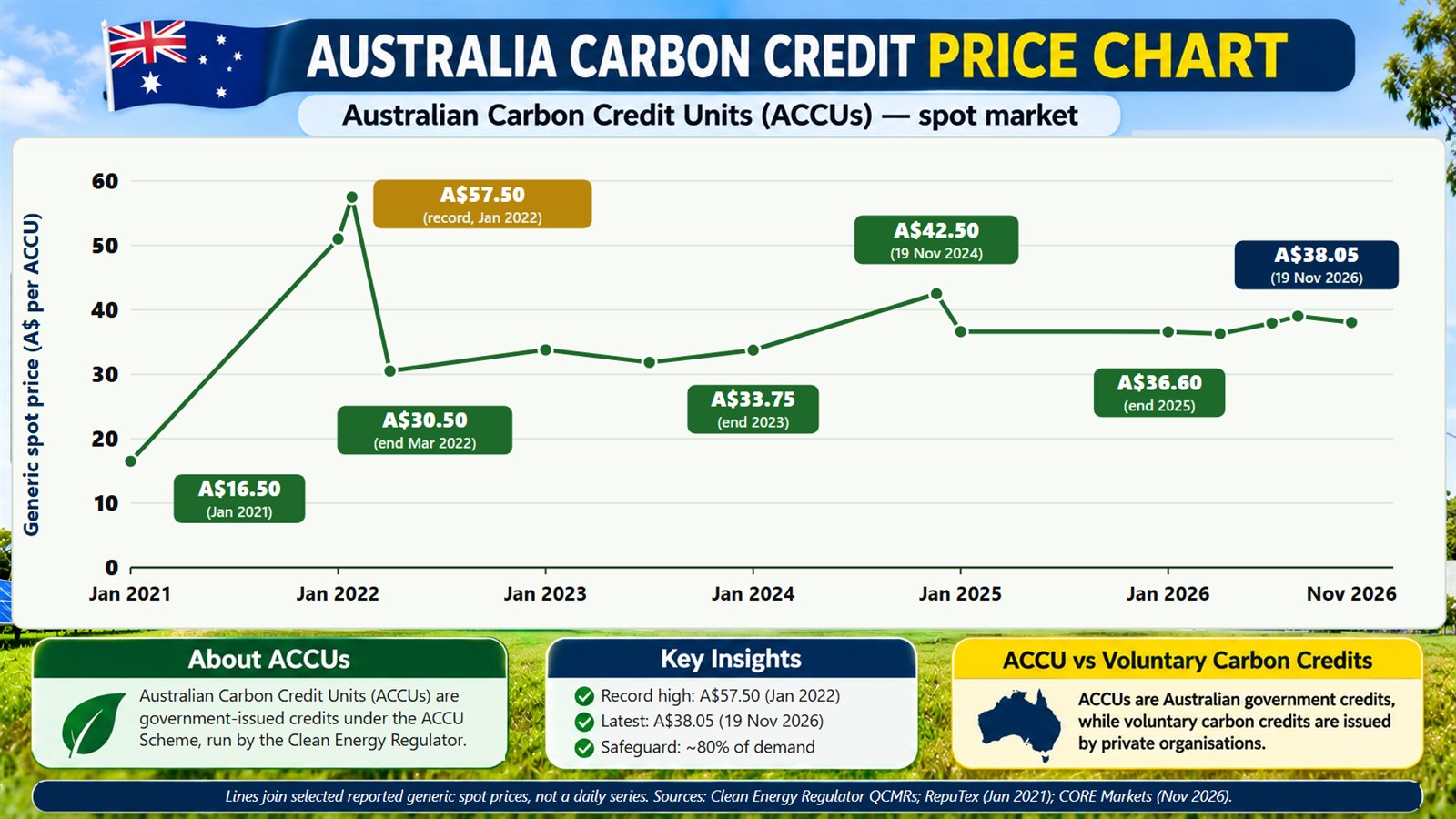
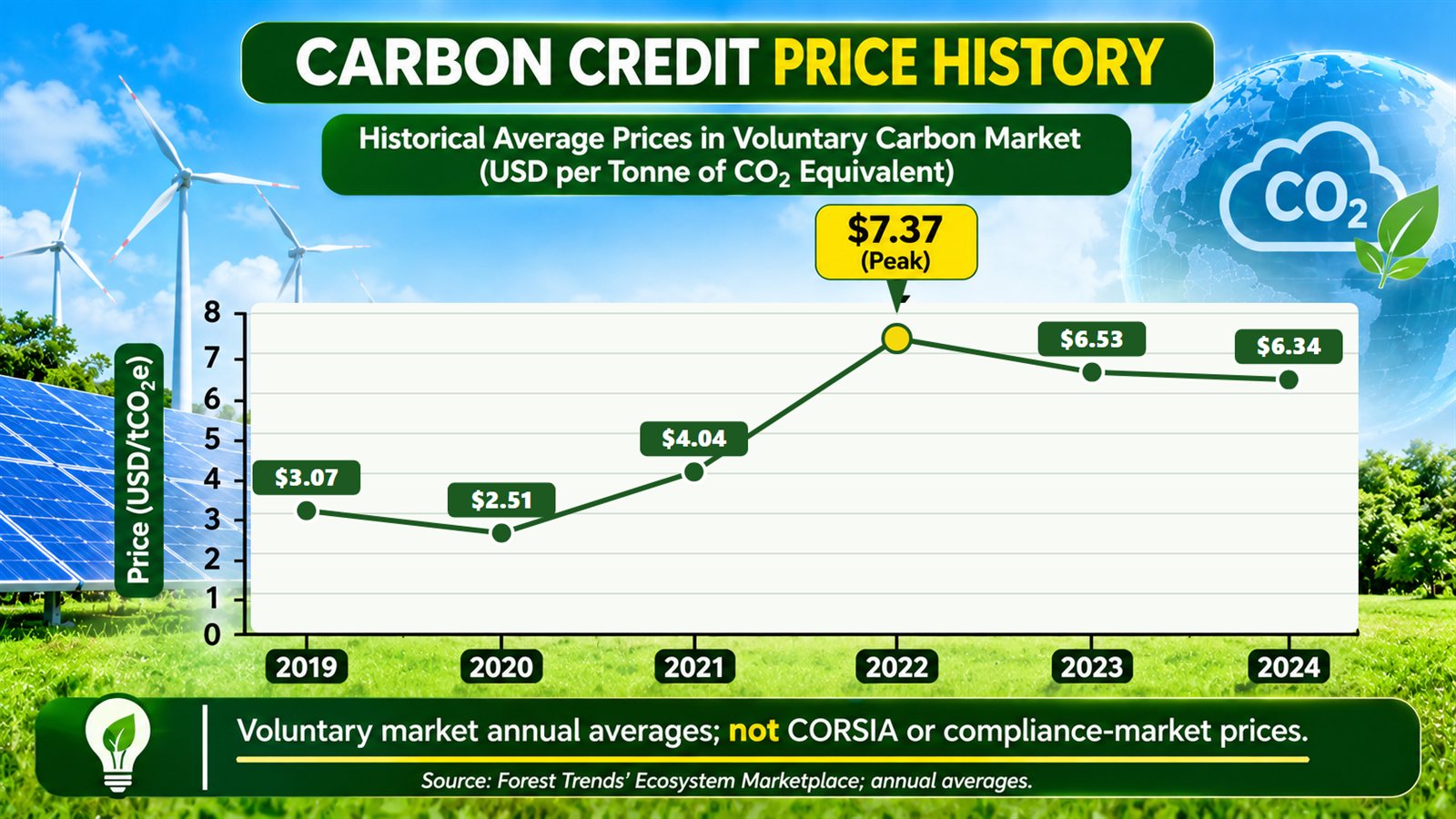
Prices vary widely by segment. As dated examples:
- Sylvera data put the average voluntary credit retired in Q3 2026 at about USD 6.92 per tonne.
- CORSIA-eligible units were assessed at about USD 13.15 for December 2026 delivery in mid-October 2026.
- EU ETS allowances, a compliance permit rather than a credit, traded around €90 per tonne in early November 2026.
These figures are not comparable like-for-like. Our price-per-ton guide has a fuller, sourced table.
Benefits and Challenges of Carbon Trading
Benefits
- creates a financial incentive to cut emissions
- channels investment into climate projects
- encourages innovation and cleaner technology
- gives regulated companies flexibility in how they meet targets
- mobilises finance for environmental activities, often in developing countries
- supports international cooperation, such as under Article 6
Challenges
- Quality concerns: some credits overstate their impact.
- Additionality and baseline uncertainty
- Double counting without proper registries and adjustments
- Permanence and reversal risks for stored carbon
- Greenwashing: misleading claims based on weak credits
- Price volatility in both compliance and voluntary markets
- Complex monitoring and verification
Carbon trading is a useful tool, not a complete solution. It works best alongside direct emission cuts, strong rules and credible verification.
What Is the Connection Between Carbon Trading, Carbon Credits and CORSIA?
CORSIA stands for the Carbon Offsetting and Reduction Scheme for International Aviation. ICAO, the UN's civil aviation agency, created it as the global market-based measure for international aviation's CO₂.
International aviation needed its own mechanism for two reasons: its emissions cross borders, and it is hard to decarbonise quickly. CORSIA works like this:
- Monitoring and reporting apply to operators emitting more than 10,000 tonnes of CO₂ a year from international flights with aeroplanes above 5,700 kg.
- Offsetting applies only to flights between participating States, against a baseline of 85% of 2019 emissions from 2024.
Airlines meet their offsetting requirements with CORSIA eligible emissions units. These are carbon credits from programmes approved by the ICAO Council that also meet unit-level conditions: scope, vintage, host-country authorisation and a CORSIA label in the registry.
Airlines acquire units through bilateral deals, brokers or exchanges. ICAO does not sell credits. The airline then cancels the units in the registry for CORSIA and reports the cancellation to its State.
Ordinary voluntary credits are not automatically eligible, and programme approval does not make every unit qualify. Our guide to CORSIA eligible carbon credits explains the conditions. Our article on the CORSIA carbon market shows how the market works.
Frequently Asked Questions
What is carbon trading in simple words?
It is buying and selling the right to emit, or proof of emission cuts. Companies that reduce emissions cheaply can sell units to those that find it harder.
What is a carbon credit and how does it work?
A carbon credit is a verified unit, generally one tonne of CO₂e reduced or removed by a project. It is issued into a registry, can be sold and transferred, and is retired when used.
What is the difference between carbon trading and carbon credits?
Carbon trading is the market activity. Carbon credits are one type of unit traded in it. Allowances, which are government permits to emit, are another.
How do companies buy and sell carbon credits?
Through bilateral deals, brokers, marketplaces or exchanges. The credits are transferred between registry accounts and retired by the final user.
What are the two main types of carbon markets?
Compliance markets, which are required by law and mainly trade allowances, and voluntary markets, where companies choose to buy project-based credits.
How is the price of a carbon credit determined?
By supply and demand, project type, quality, verification, vintage, location, eligibility for compliance uses, buyer preferences and transaction costs.
How are carbon credits used under CORSIA?
Airlines with offsetting requirements buy CORSIA eligible emissions units that meet ICAO's conditions. They cancel them in the registry for CORSIA and report the cancellation to their State.
Key Takeaways
So, what is carbon trading and carbon credit? Carbon trading is the market for carbon units. Carbon credits are units representing verified reductions or removals, while allowances are government permits under a cap.
Together, they create financial incentives to cut emissions, but only when credits have high integrity, monitoring is transparent, verification is reliable and market rules are sound.
To learn more about carbon credits and aviation compliance, explore the CORSIA resources at CORSIA Carbon Credit.
Sources
- UNFCCC – Article 6 of the Paris Agreement
- World Bank – Carbon Pricing Dashboard
- ICAO – CORSIA Eligible Emissions Units
- IATA – CORSIA fact sheet
- Carbon credit price tracker – Sylvera data (reviewed 5 October 2026)
- green.earth – CORSIA activity builds across prices, airlines and supply (16 October 2026)
- GMK Center – European carbon prices exceeded €90/t in November (1 November 2026)
- Verra
- Gold Standard